
Designing a local-first API platform from scratch.
I joined Requestly as the founding designer and owned the product design end to end. That included the API client, testing and debugging workflows, network tools, AI features, and the design system. I still lead design for it at BrowserStack.
Goals
We wanted developers to design, test, mock, and debug APIs in one place. Collections would stay as local files that work with Git, so teams could use their existing workflow without creating another cloud account.
Quick background
Requestly already helped developers intercept and mock HTTP traffic. But when they needed to send a request, inspect a response, or run a test, they often had to leave Requestly and open another tool.
At the same time, popular API clients were moving local work into the cloud and asking people to sign in before sending a basic request. We saw a chance to connect API testing, mocking, and traffic inspection in one platform. We started with a desktop app built around local files.
The problems
Work was split across tools: Developers used Requestly to intercept or mock traffic, then moved to another app to send requests and test responses.
Less control over API data: Other clients were removing local scratchpads and pushing collections into cloud accounts.
Switching took too much work: Moving from another client often meant rebuilding collections, environments, and requests by hand.
The workflow felt disconnected: Requests, tests, mocks, and live network traffic did not share one clear place to work.
Key product decisions
Keep collections as local files: Collections are saved as plain files on the developer's machine. Teams can version, review, and share them through the Git workflow they already use.
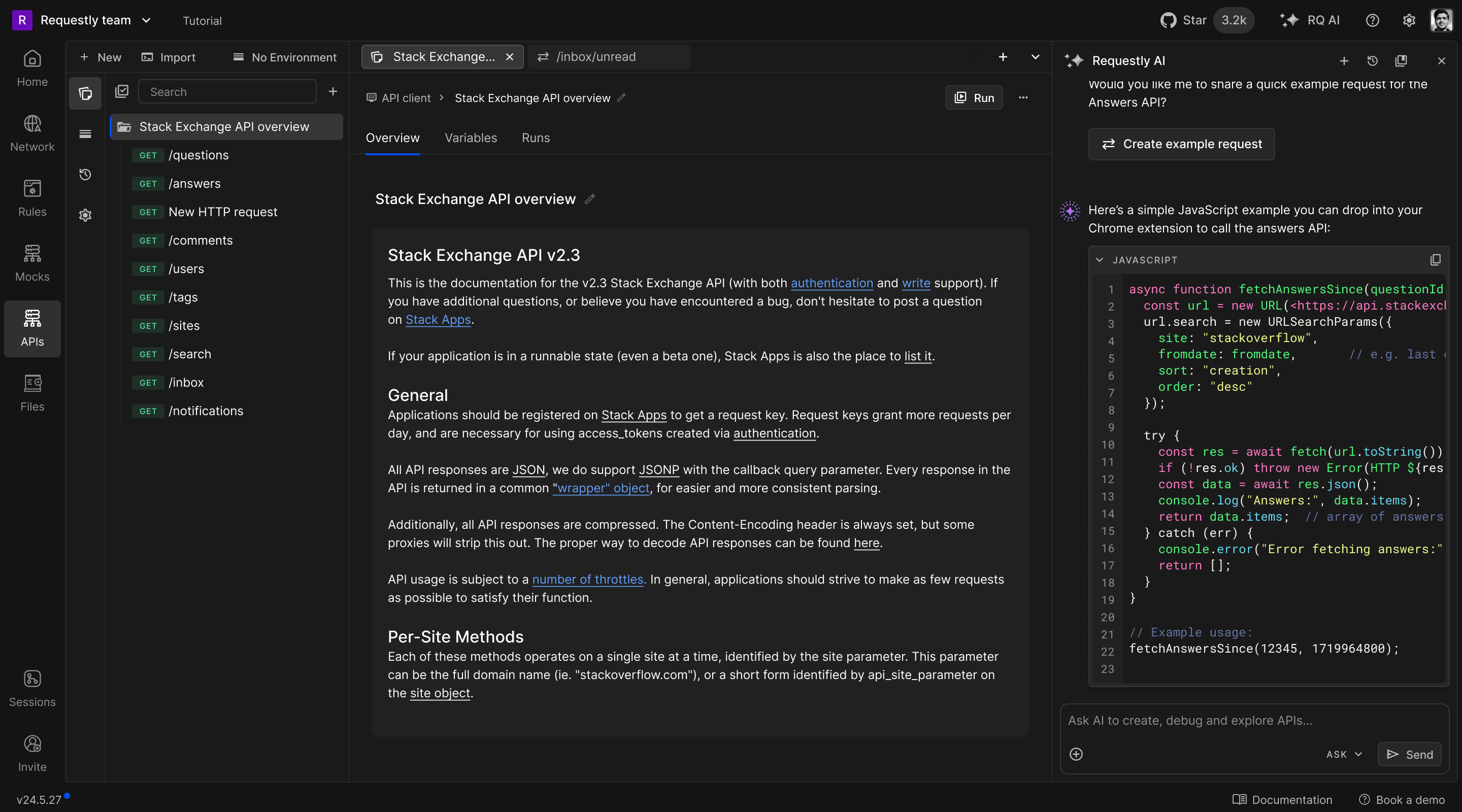
Connect the whole API workflow: The API client, test runner, mocks, and network inspector belong in the same workspace. A captured request can become something a developer can edit, save, test, and reuse.
Keep the workspace dense but readable: Headers, parameters, auth, scripts, and responses all compete for space. I used clear groups, flexible panels, and visible error states so developers can scan the screen without losing context.
Make switching easy: Developers can bring in existing collections or cURL commands and start working without recreating everything first.
Import & first run
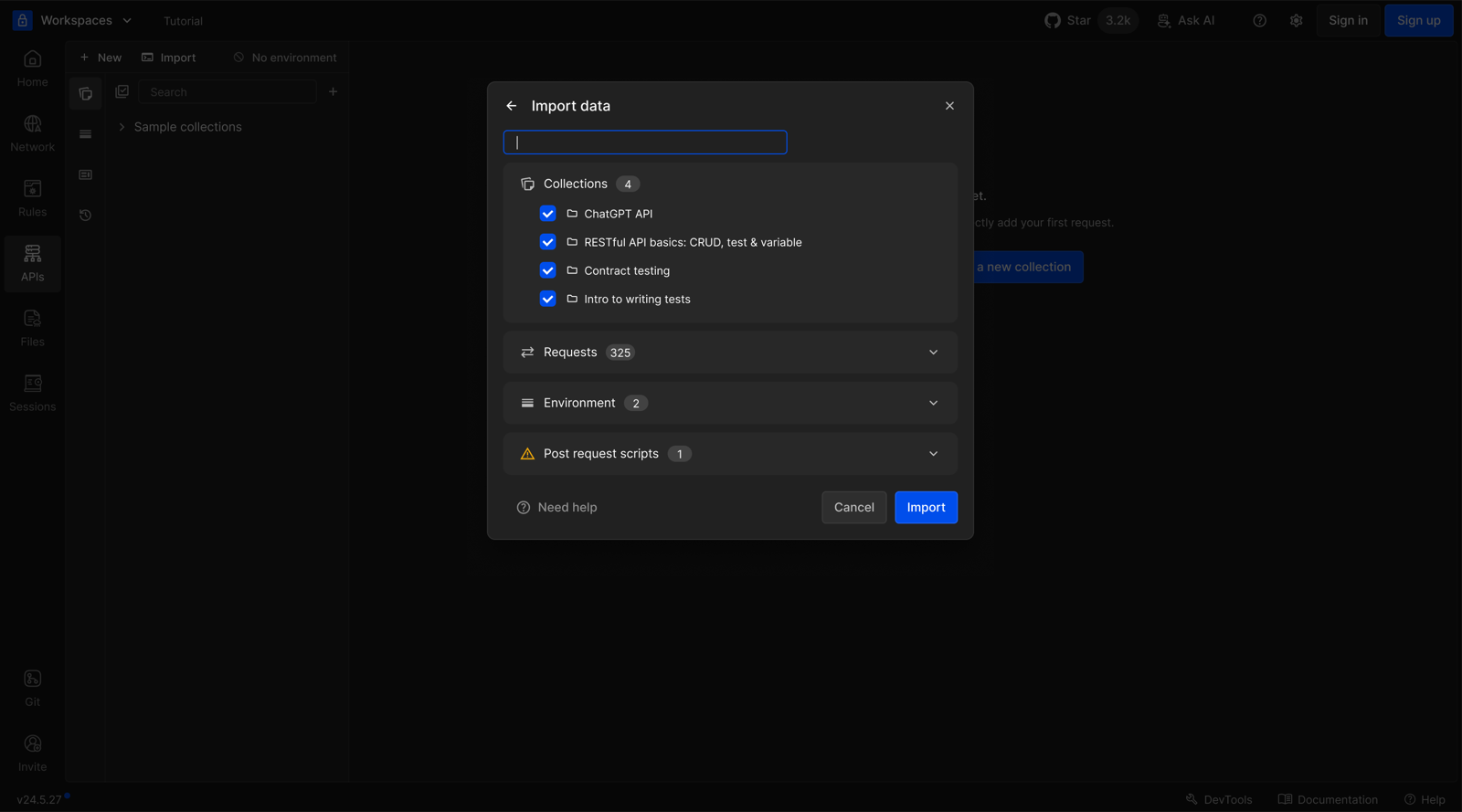
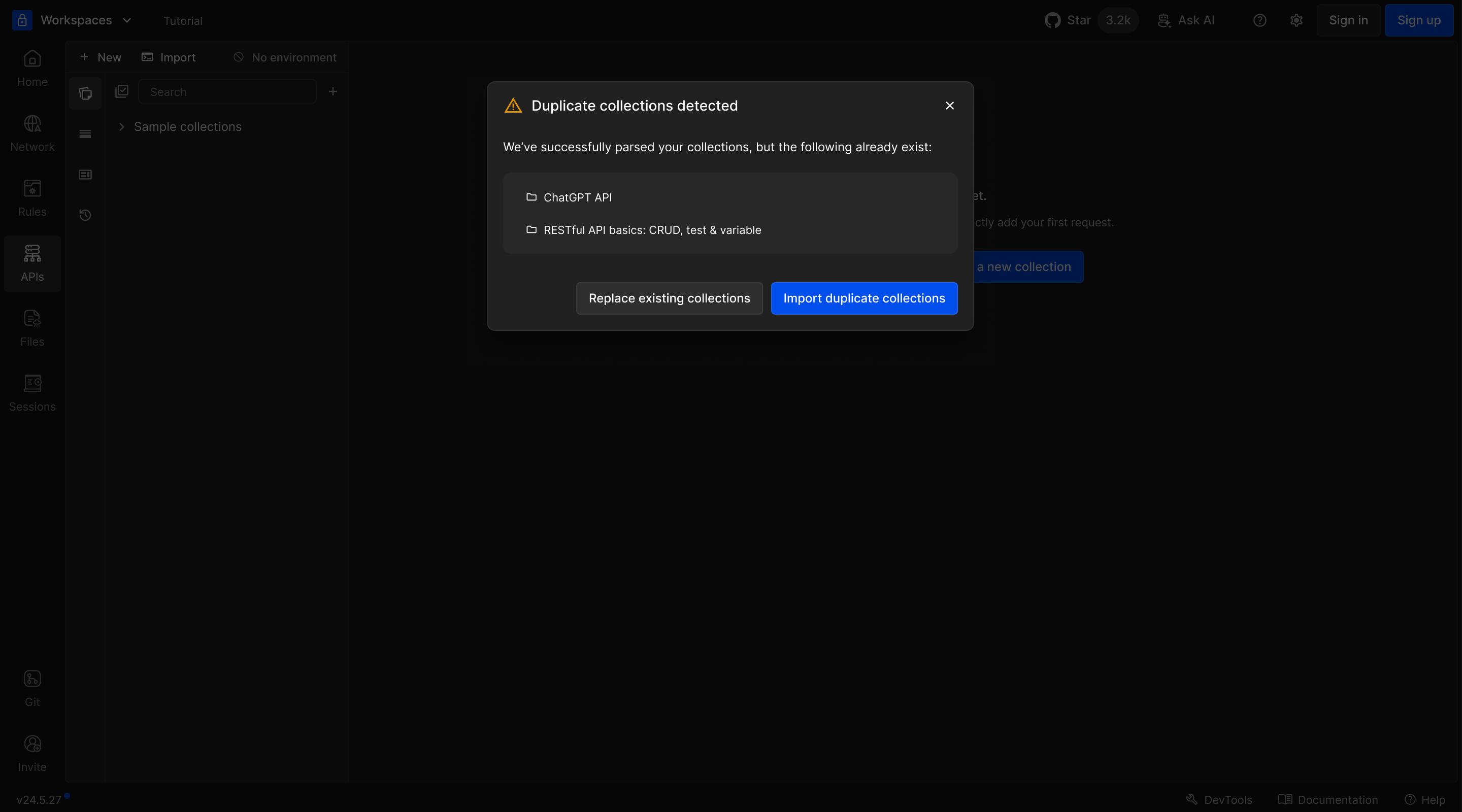
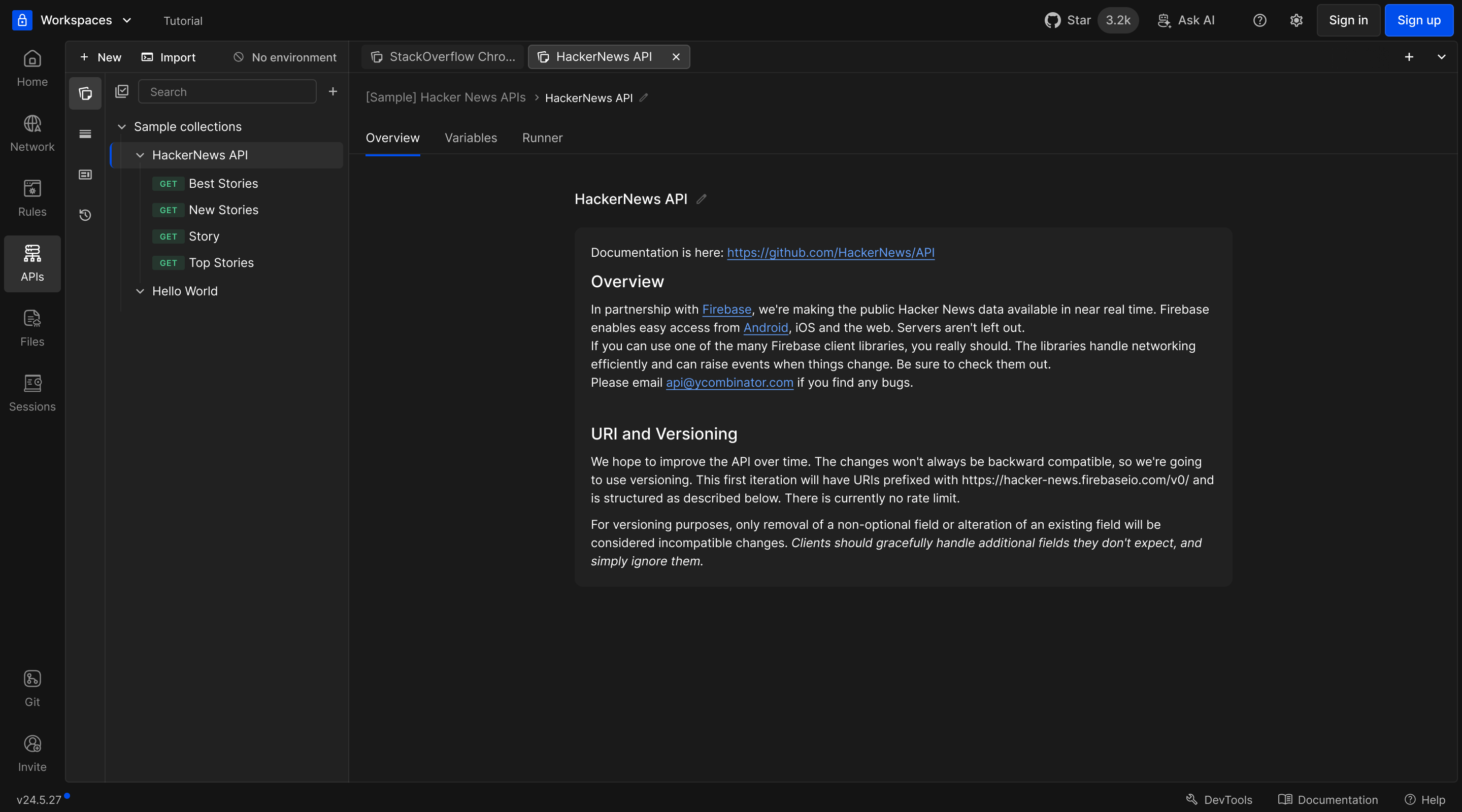
Importing an existing collection is the quickest way to get started. Developers can choose what to bring in, review duplicate collections, and avoid overwriting work by mistake.
Request testing
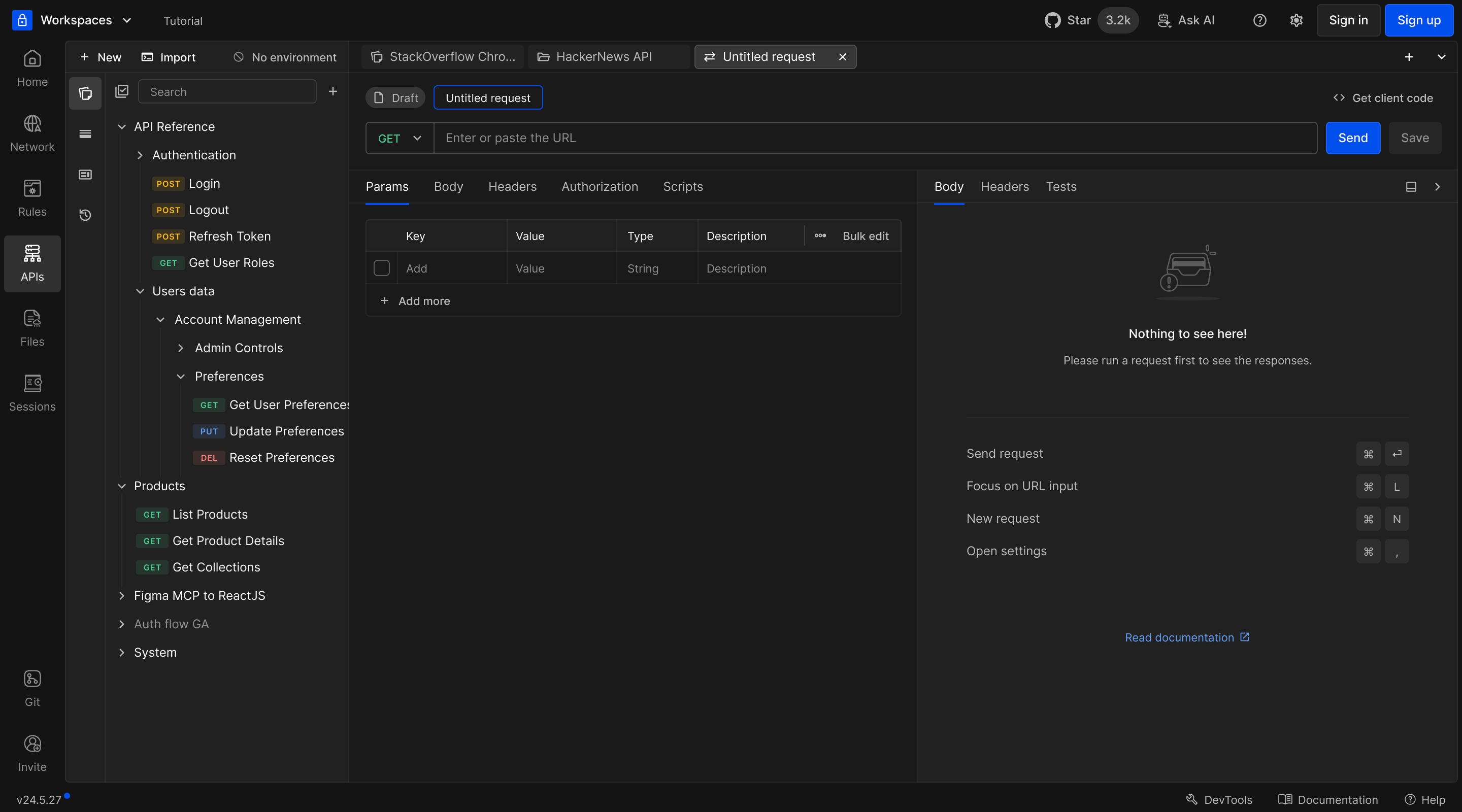
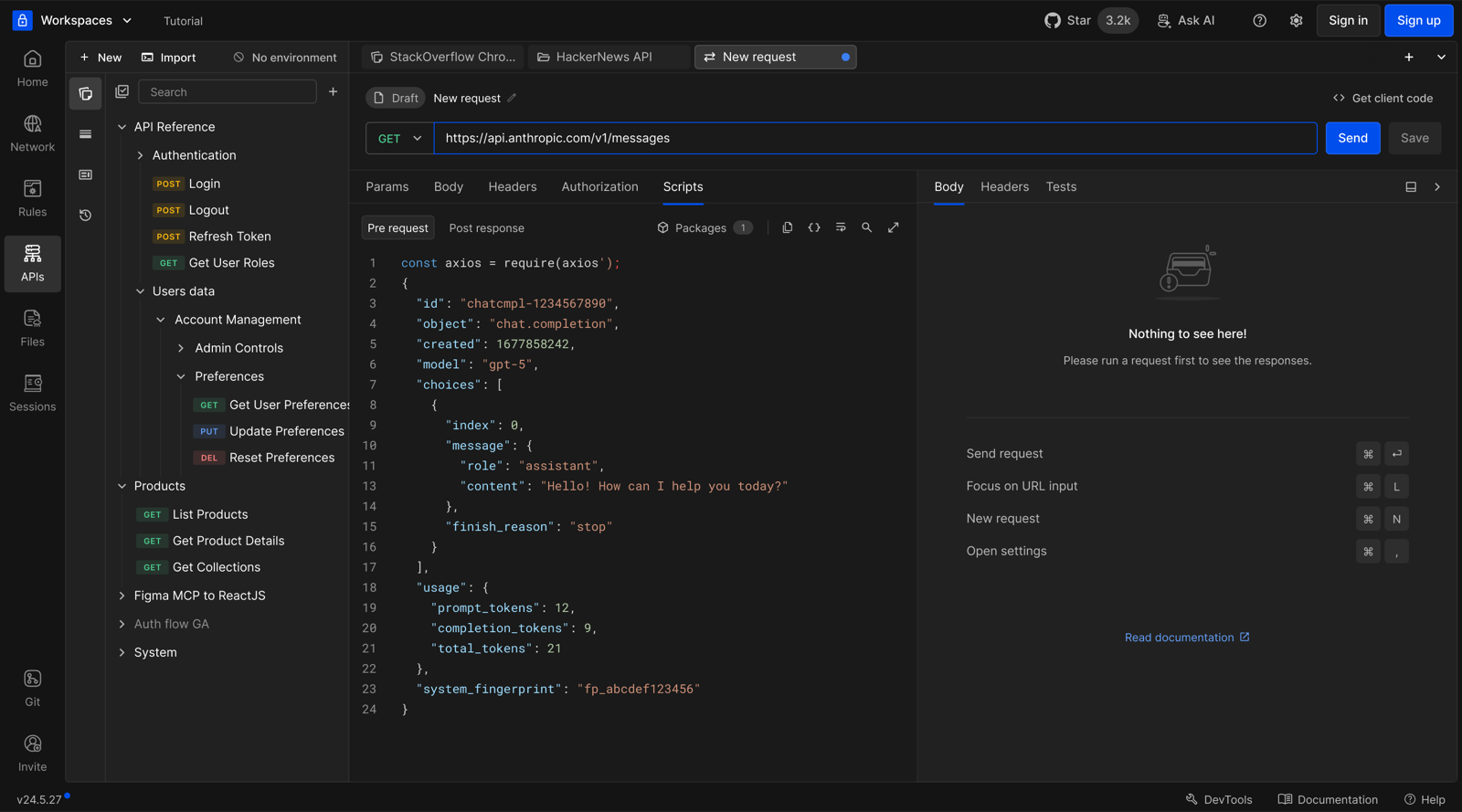
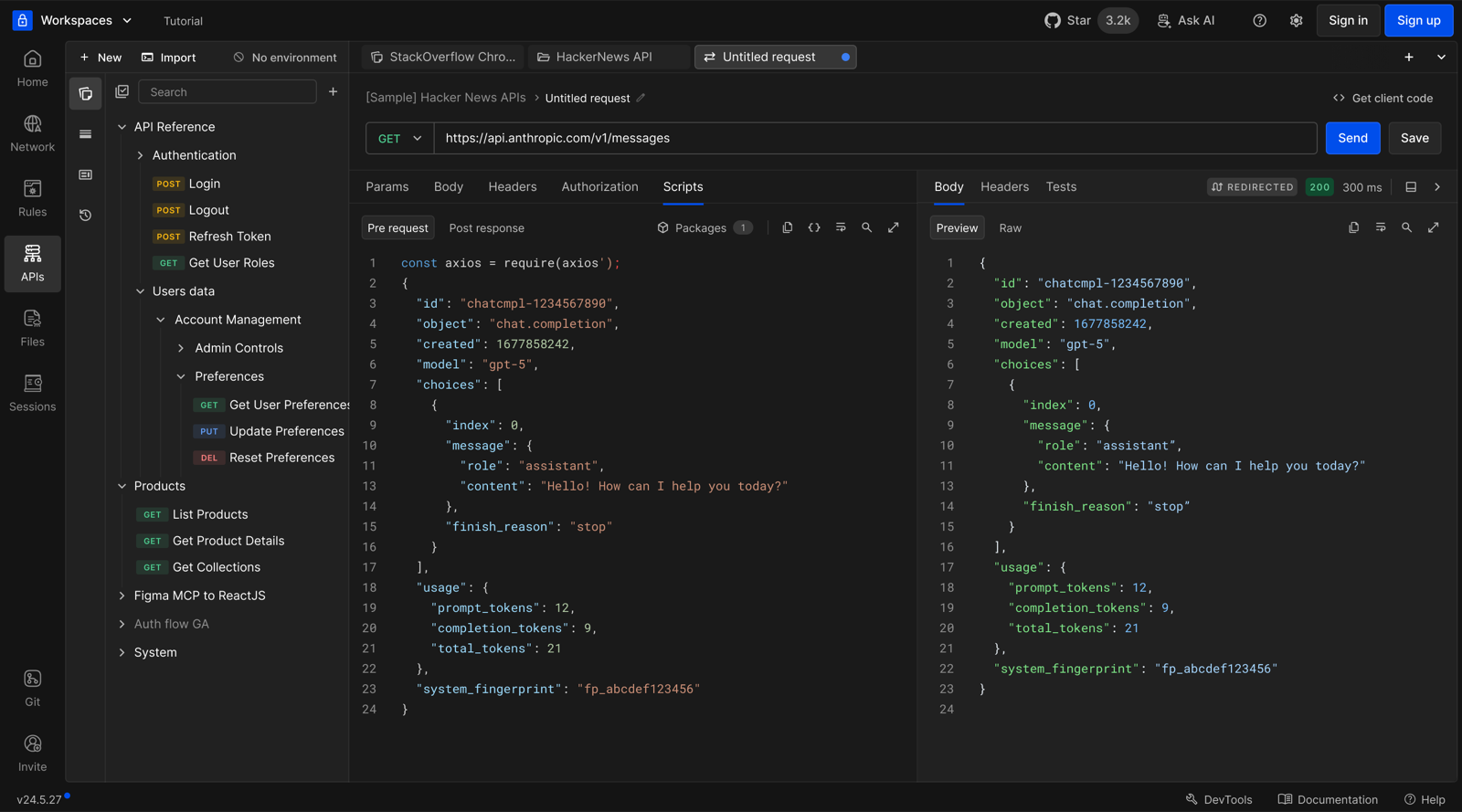
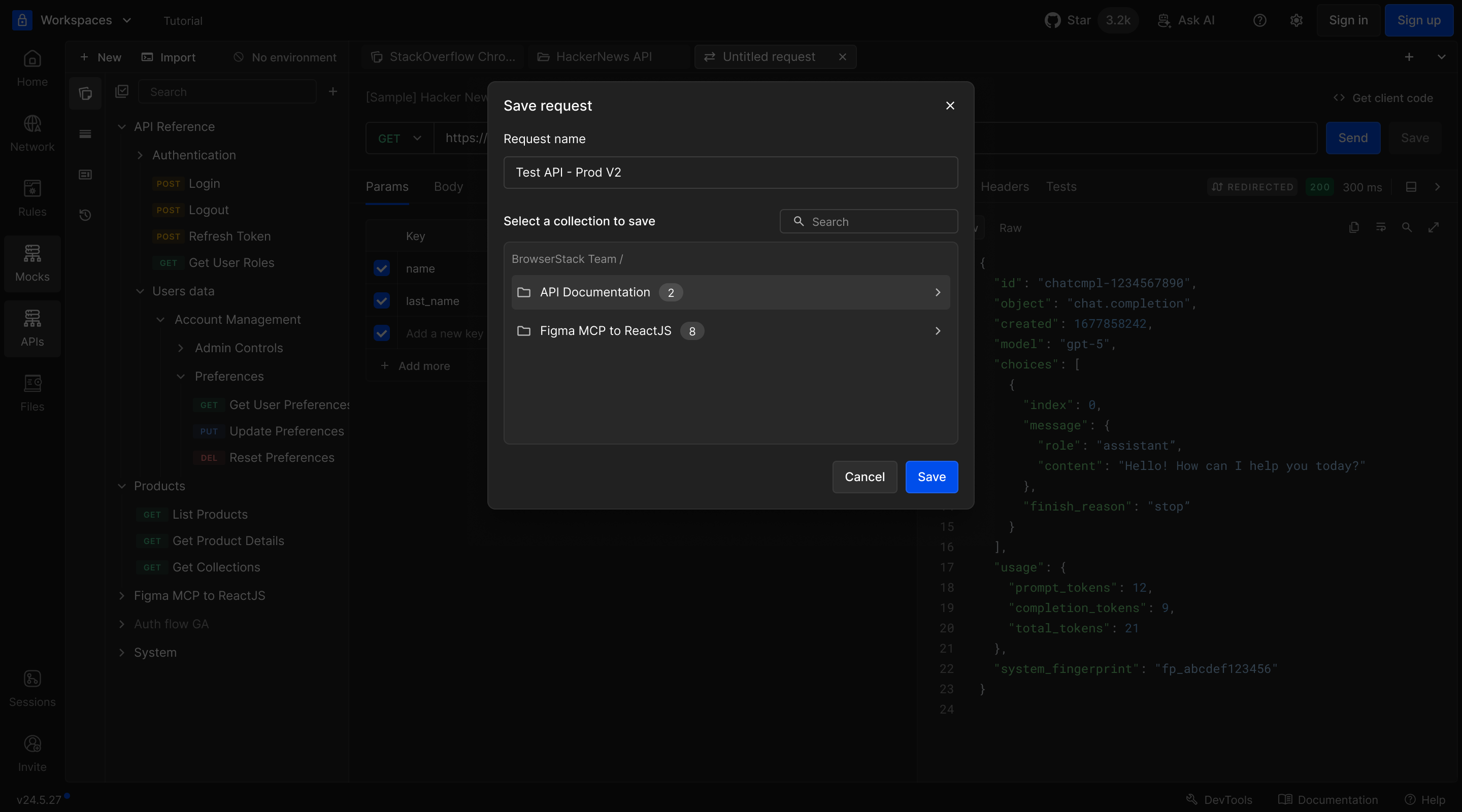
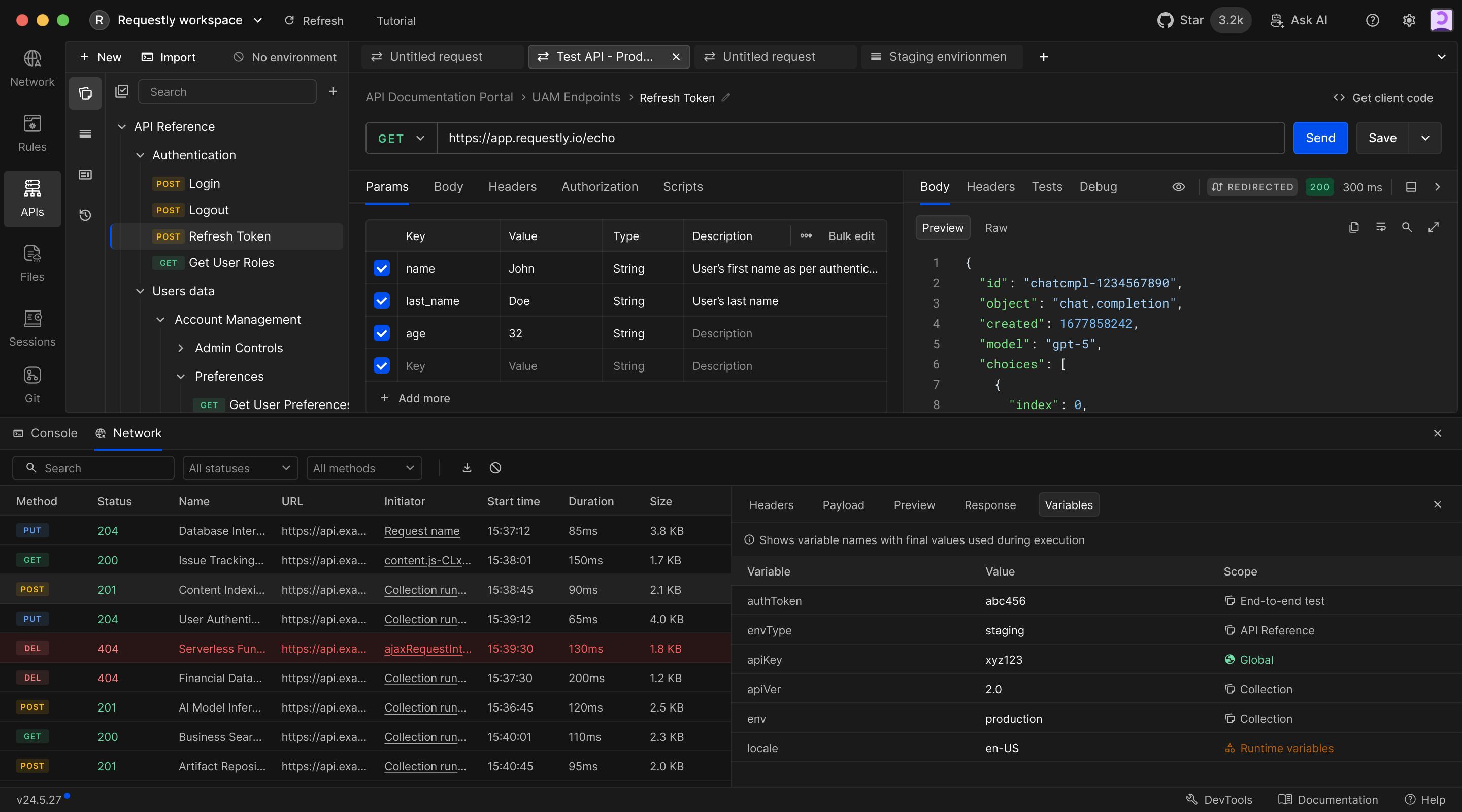
This is the main place for sending requests and reading responses. I gave the response more room and used flexible split panels so large JSON bodies stay readable on smaller laptops. Scripts, history, and save actions stay close without getting in the way.
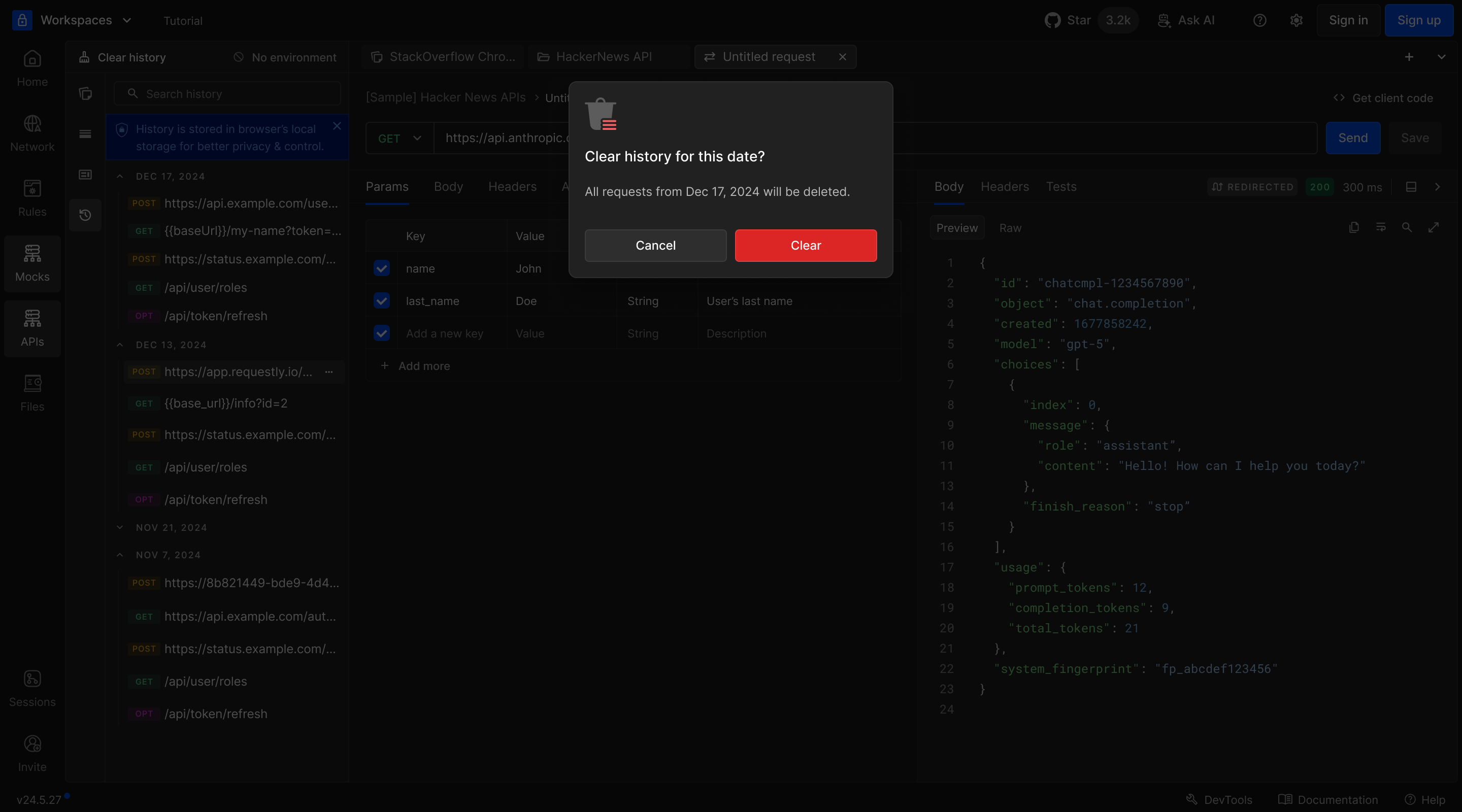
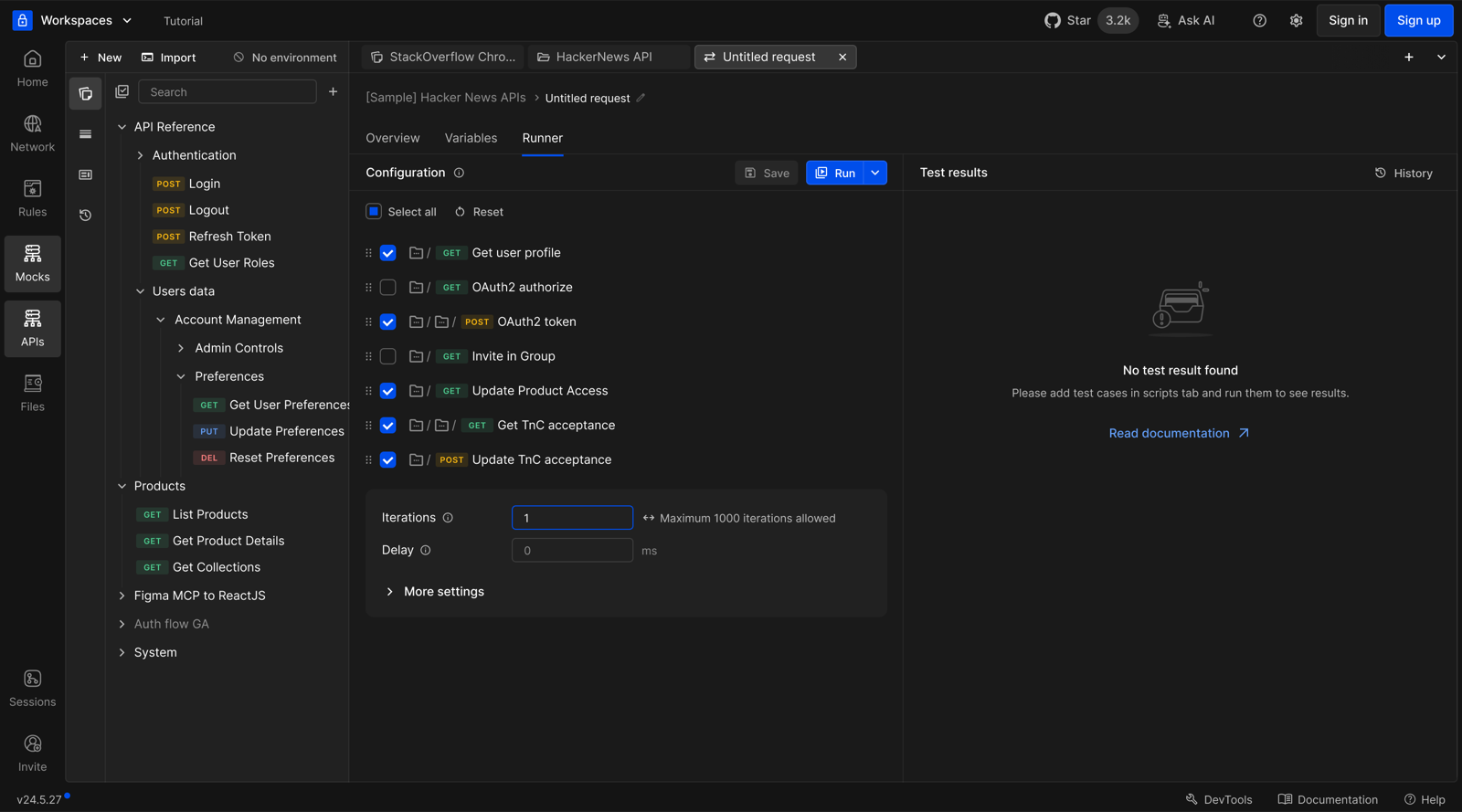
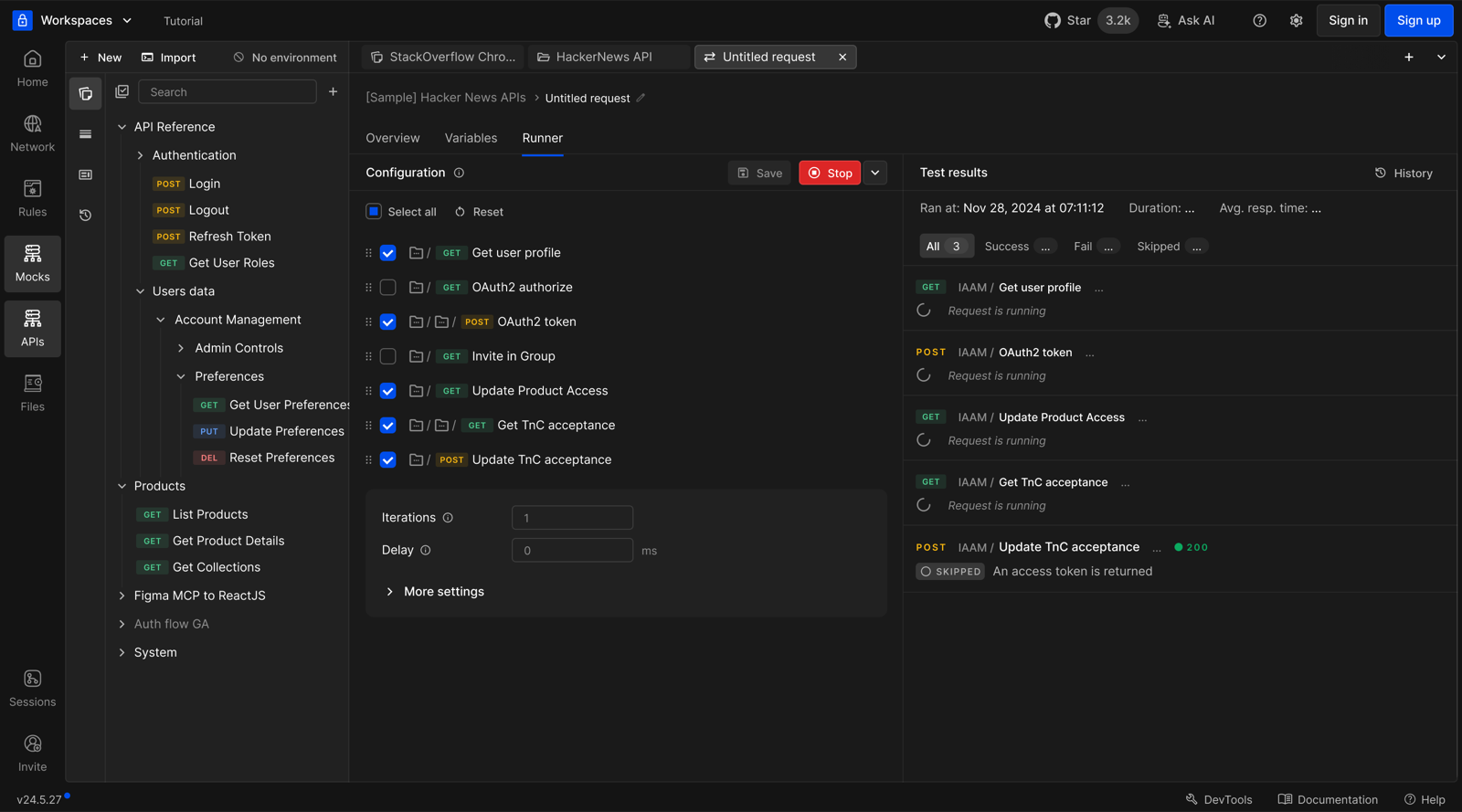
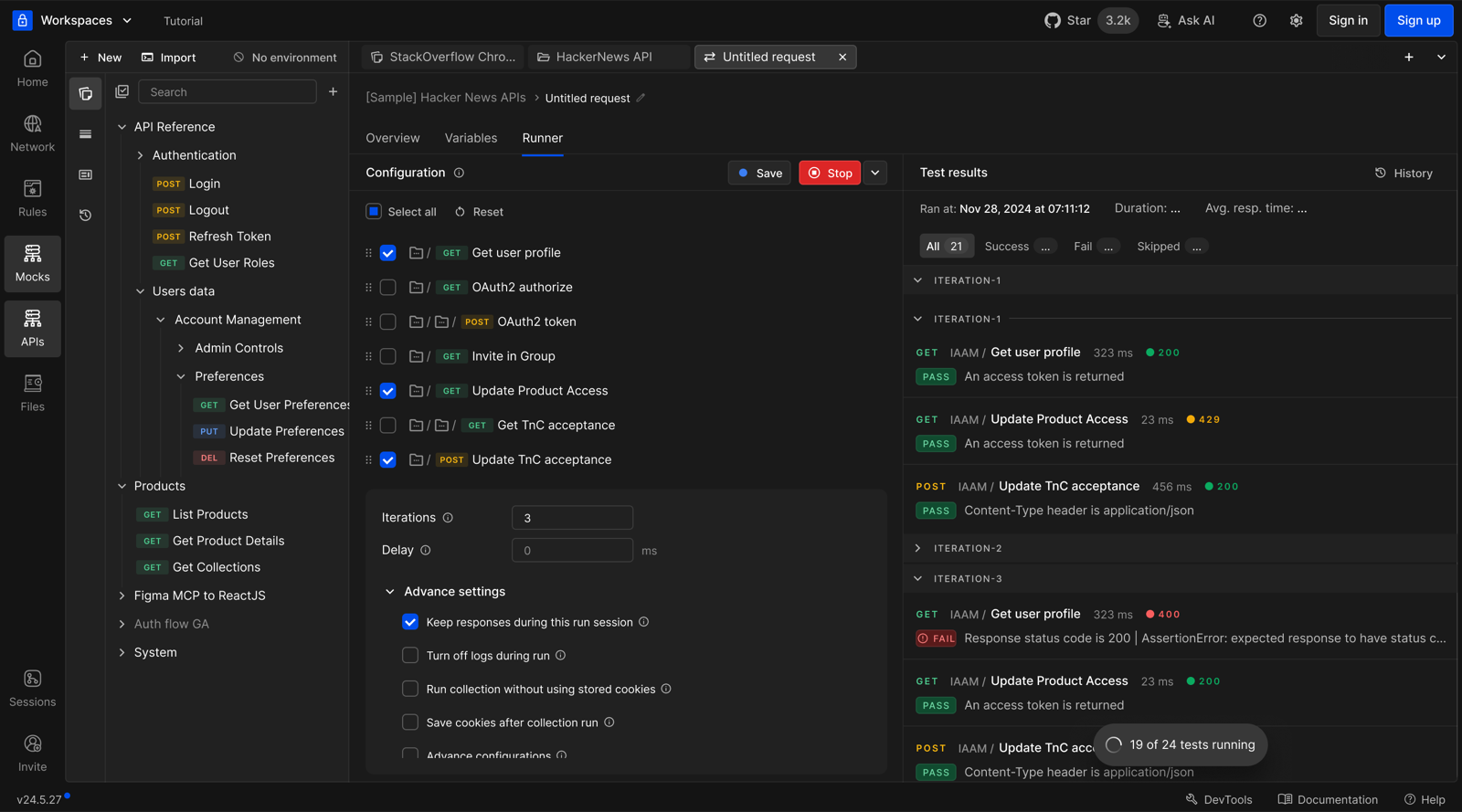
Collection runner
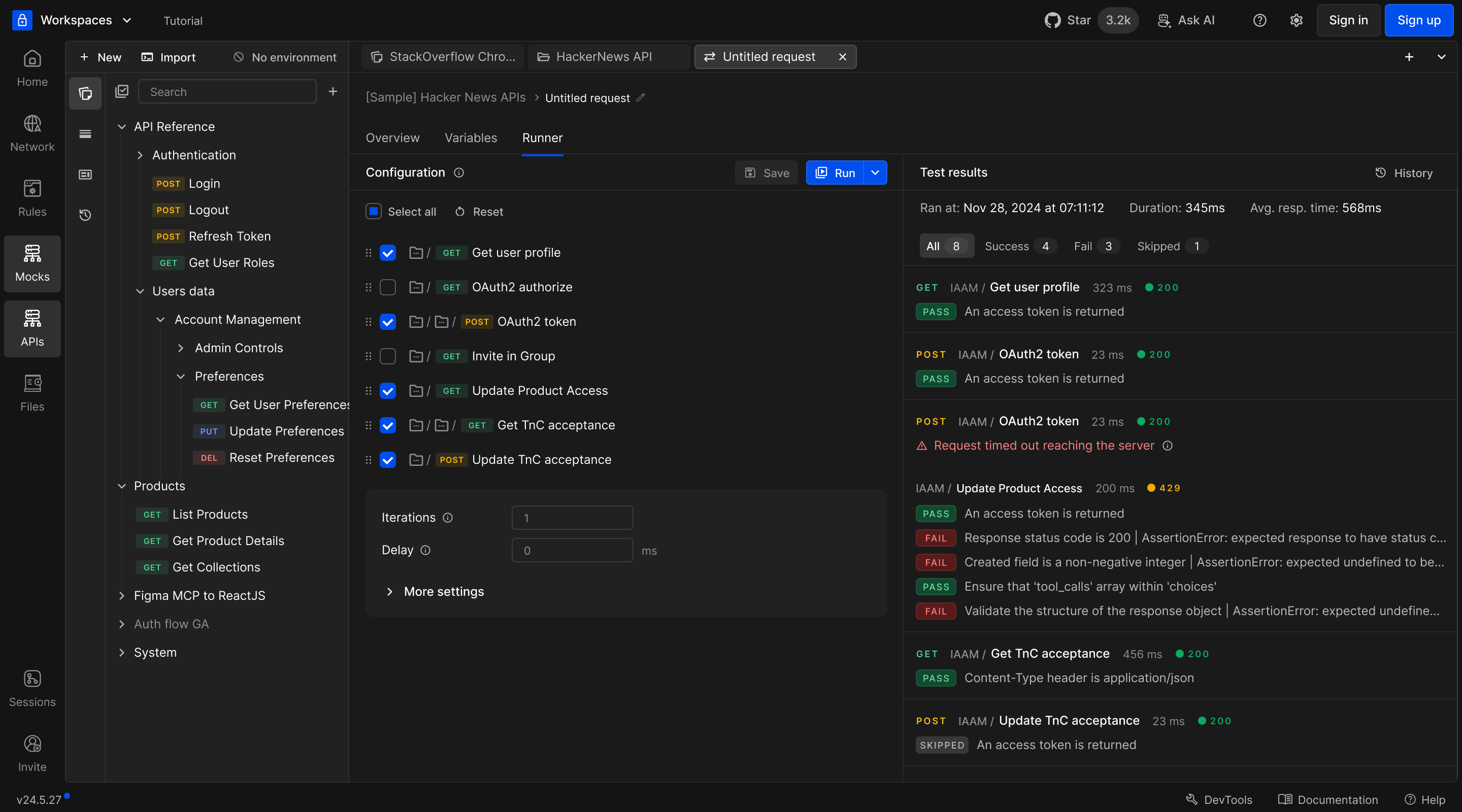
Developers can choose which requests to run and follow pass, fail, and skip results as the collection runs. The results stay in the same workspace as the requests and tests.
Network inspector
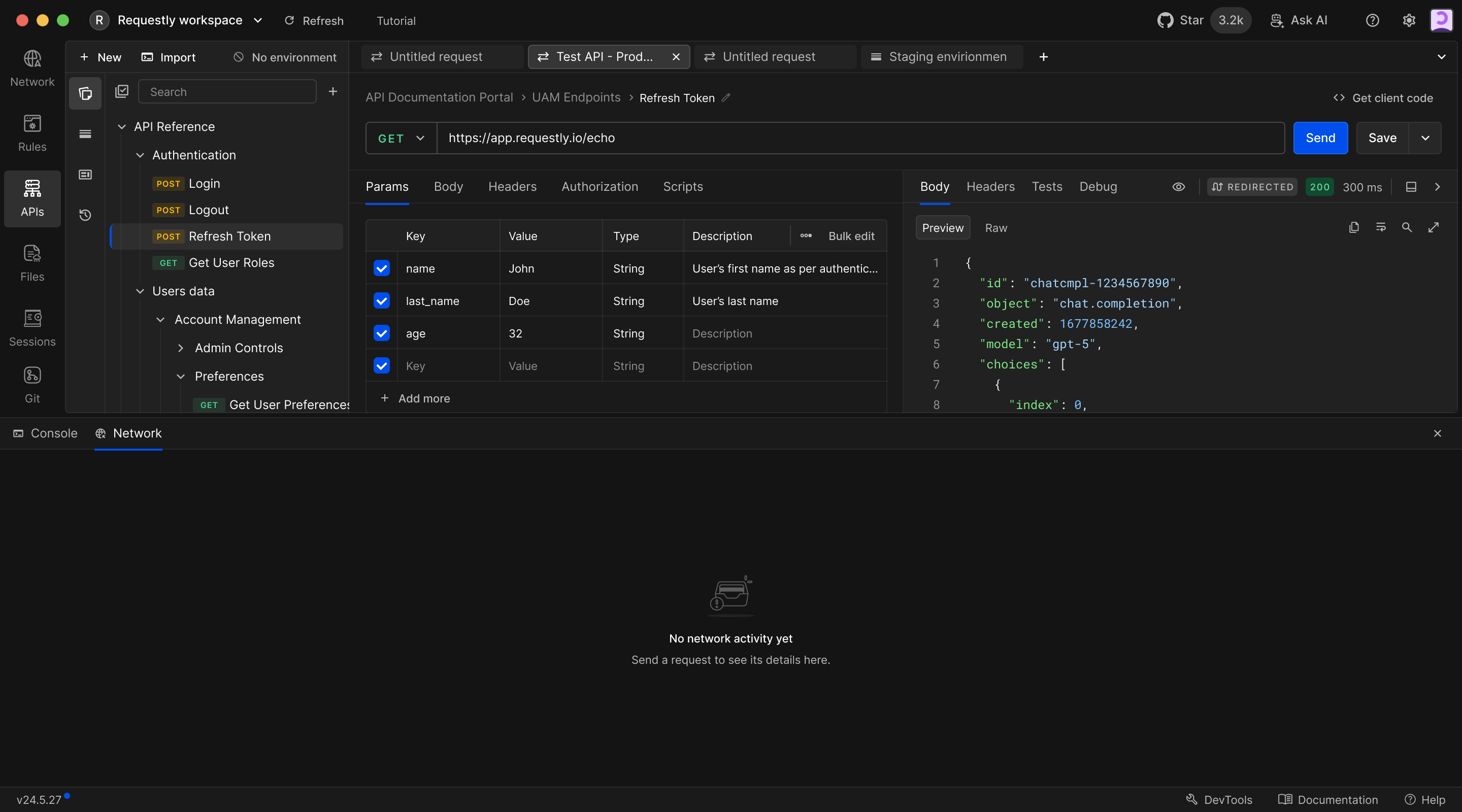
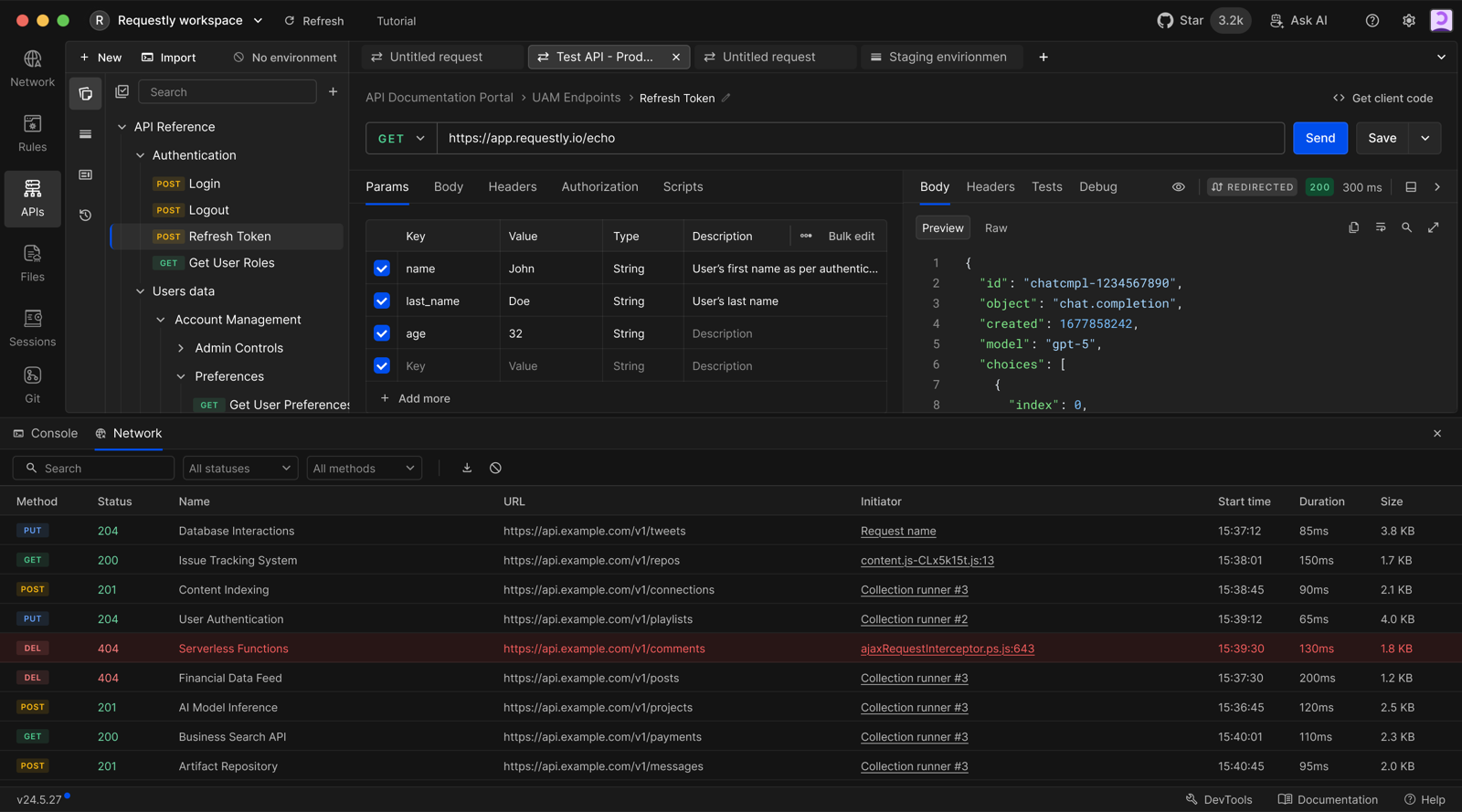
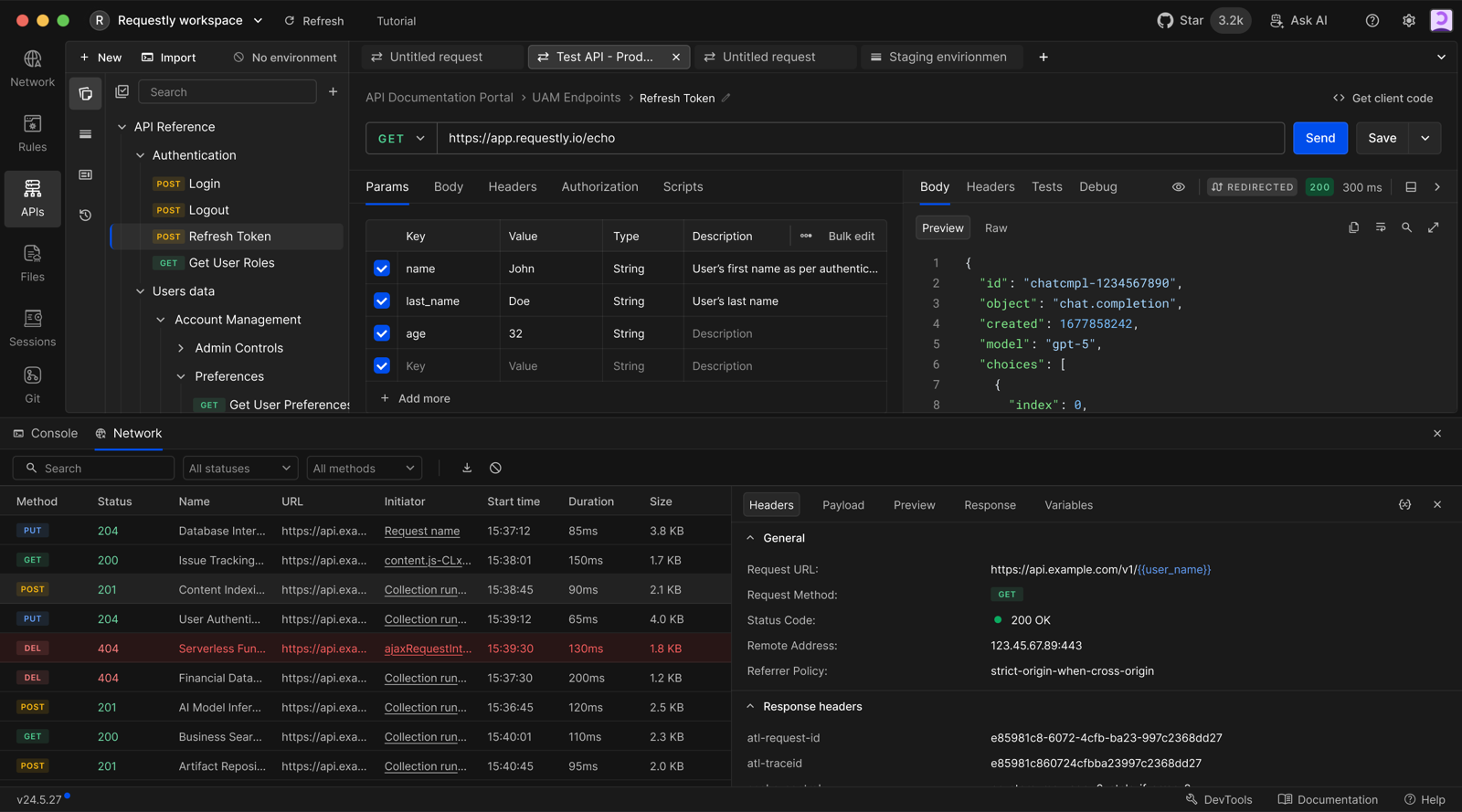
The network inspector brings live traffic into the same window as the API client. Developers can open a call, check its headers and variables, and use it in their API work without changing tools.
GraphQL
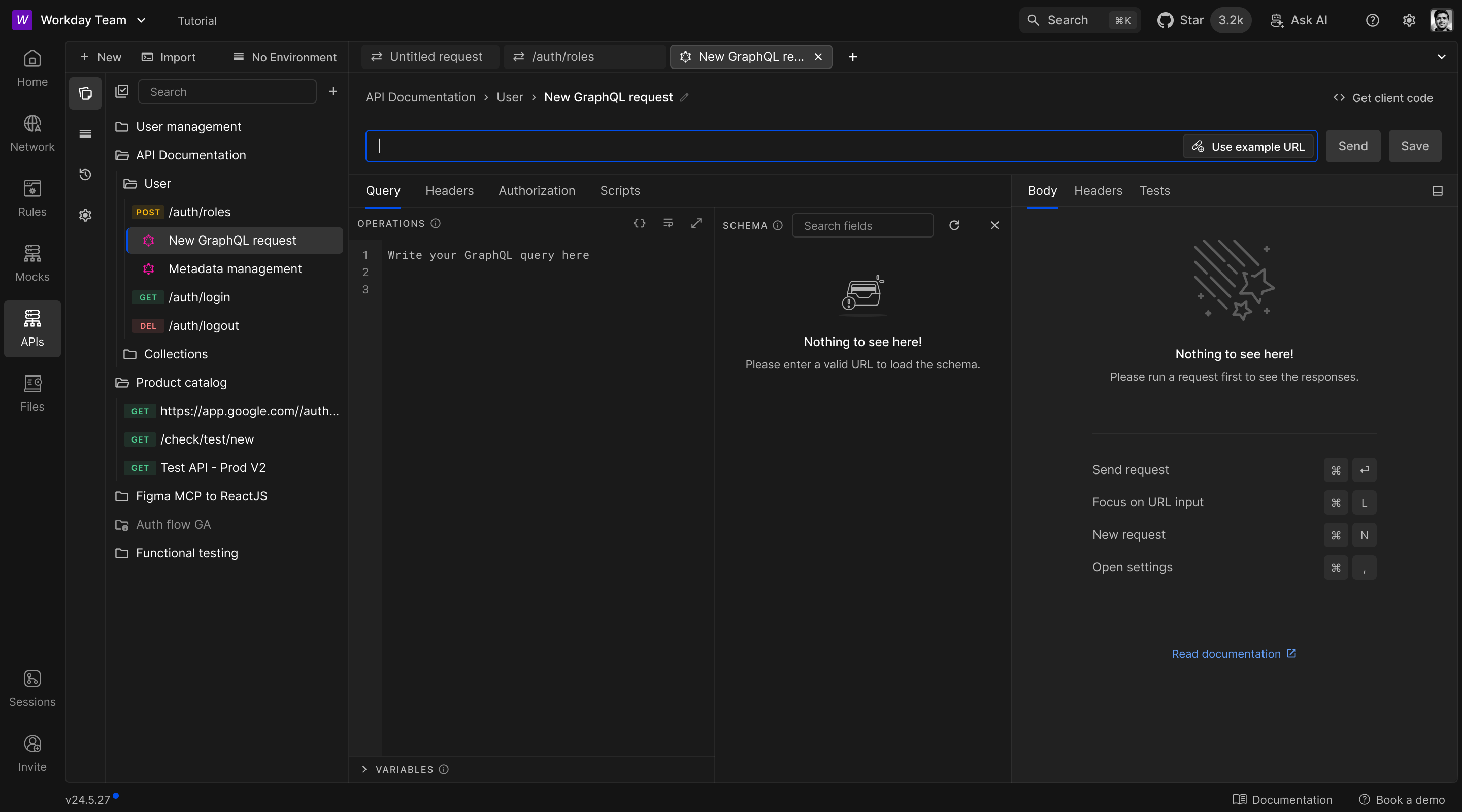
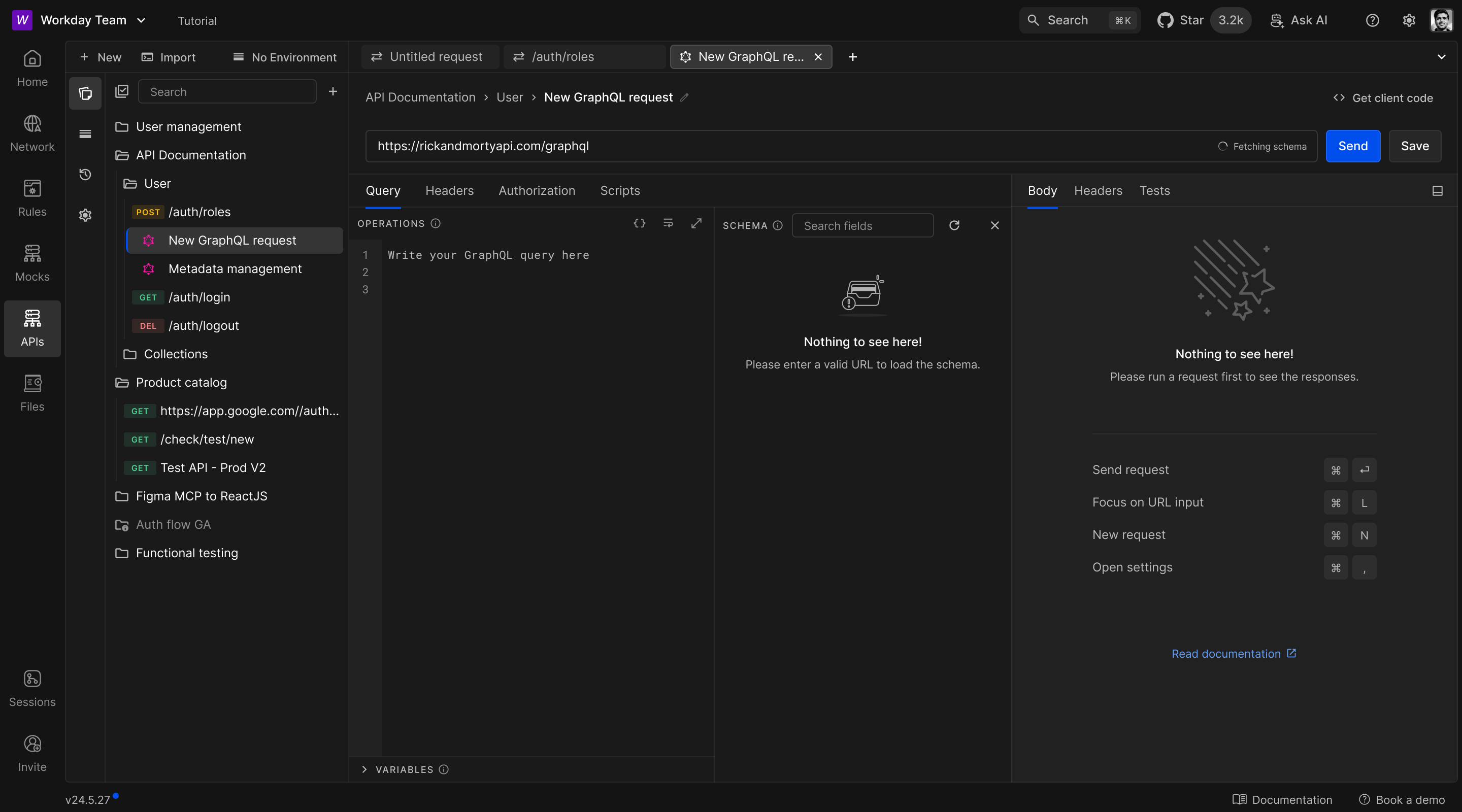
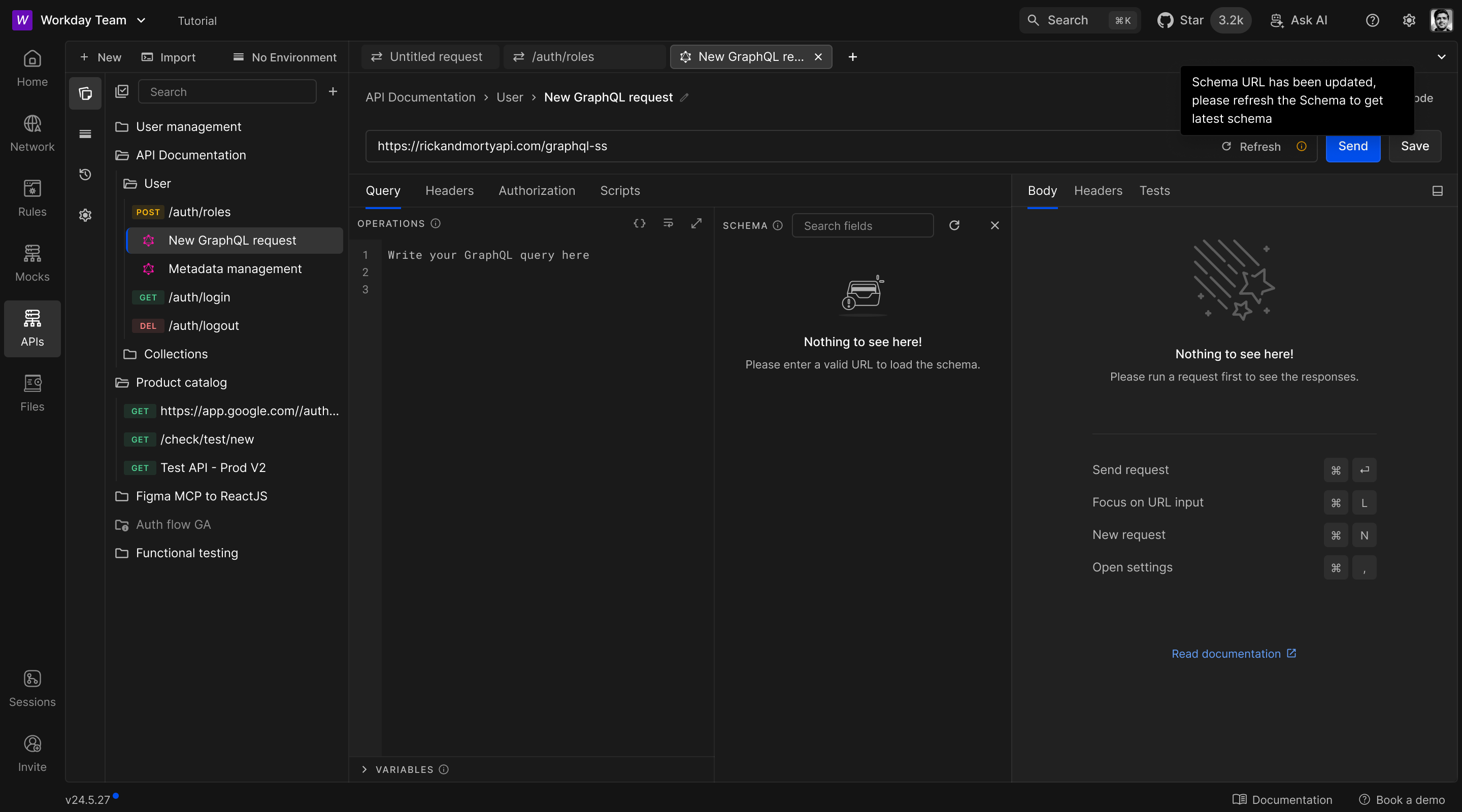
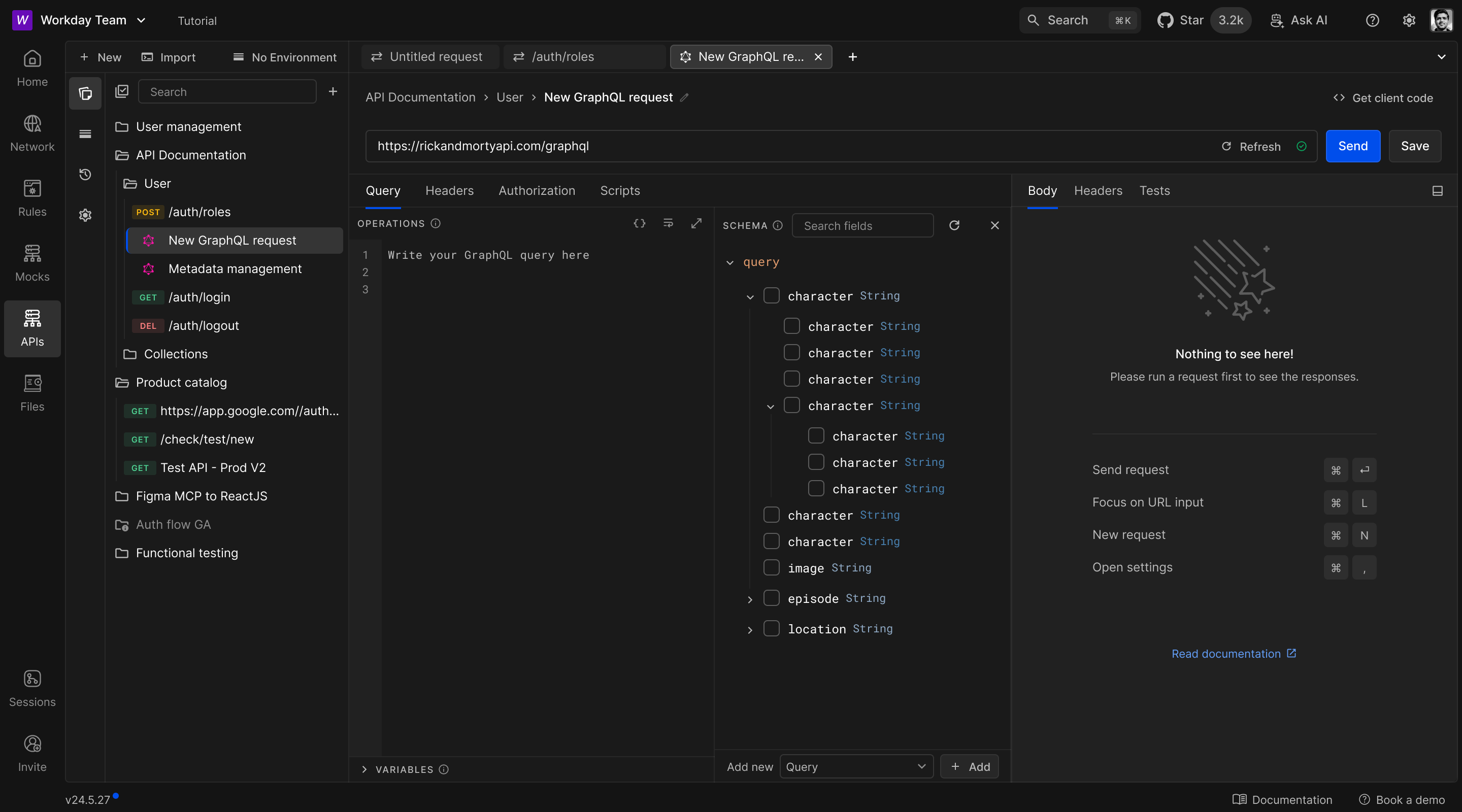
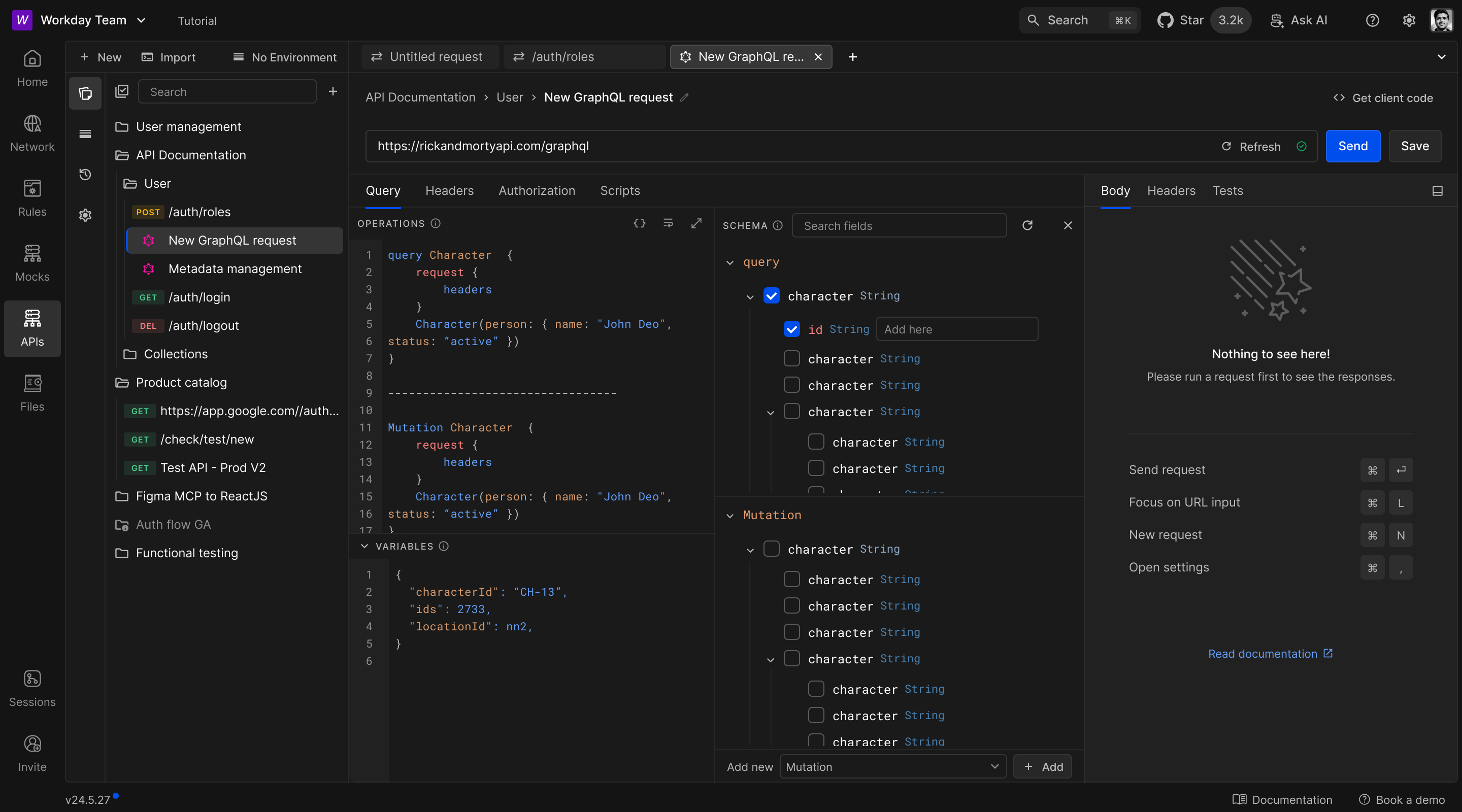
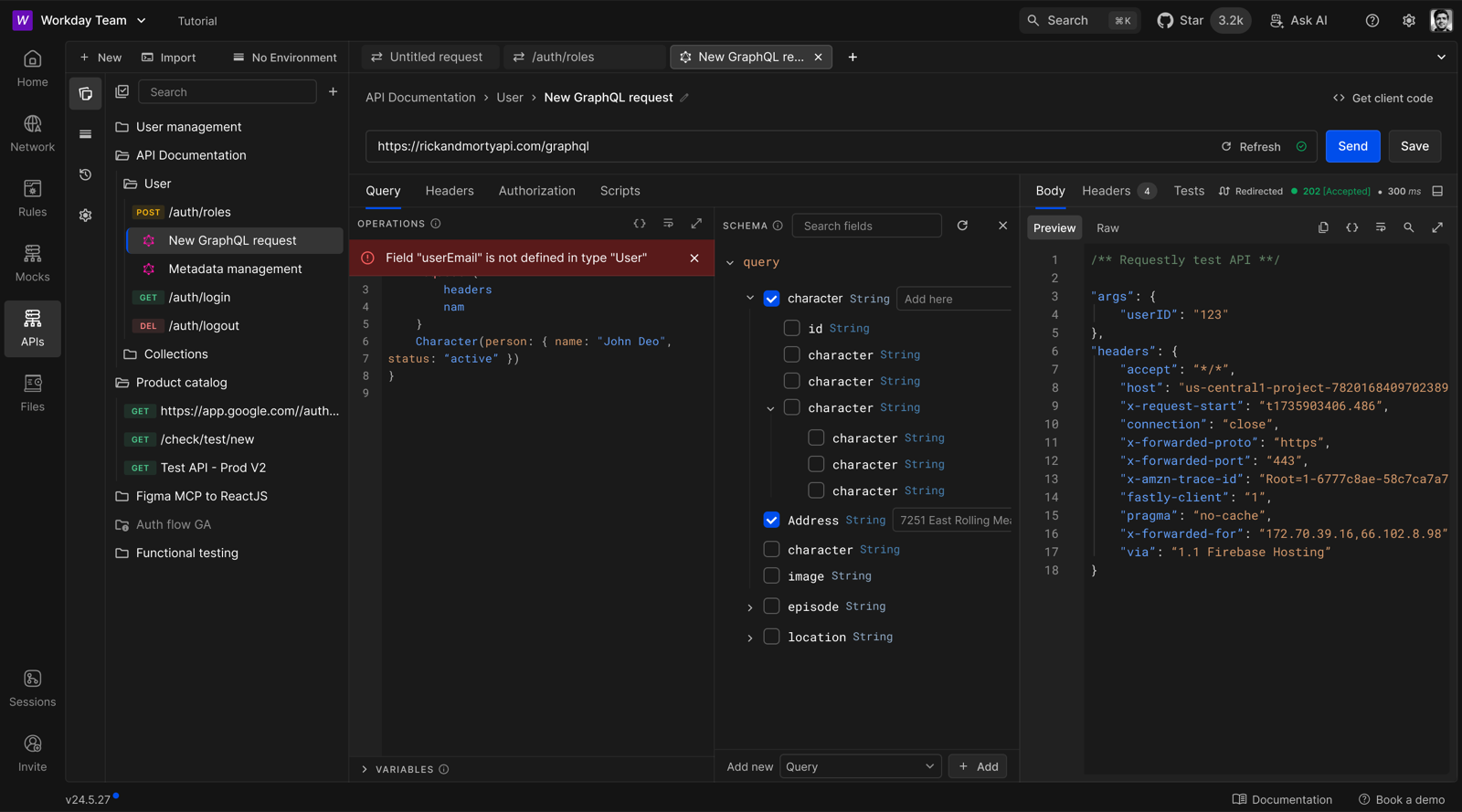
The GraphQL editor can fetch a schema, browse fields, manage variables, and show validation errors while a query is being written. REST and GraphQL work stays in the same place.
AI assistant
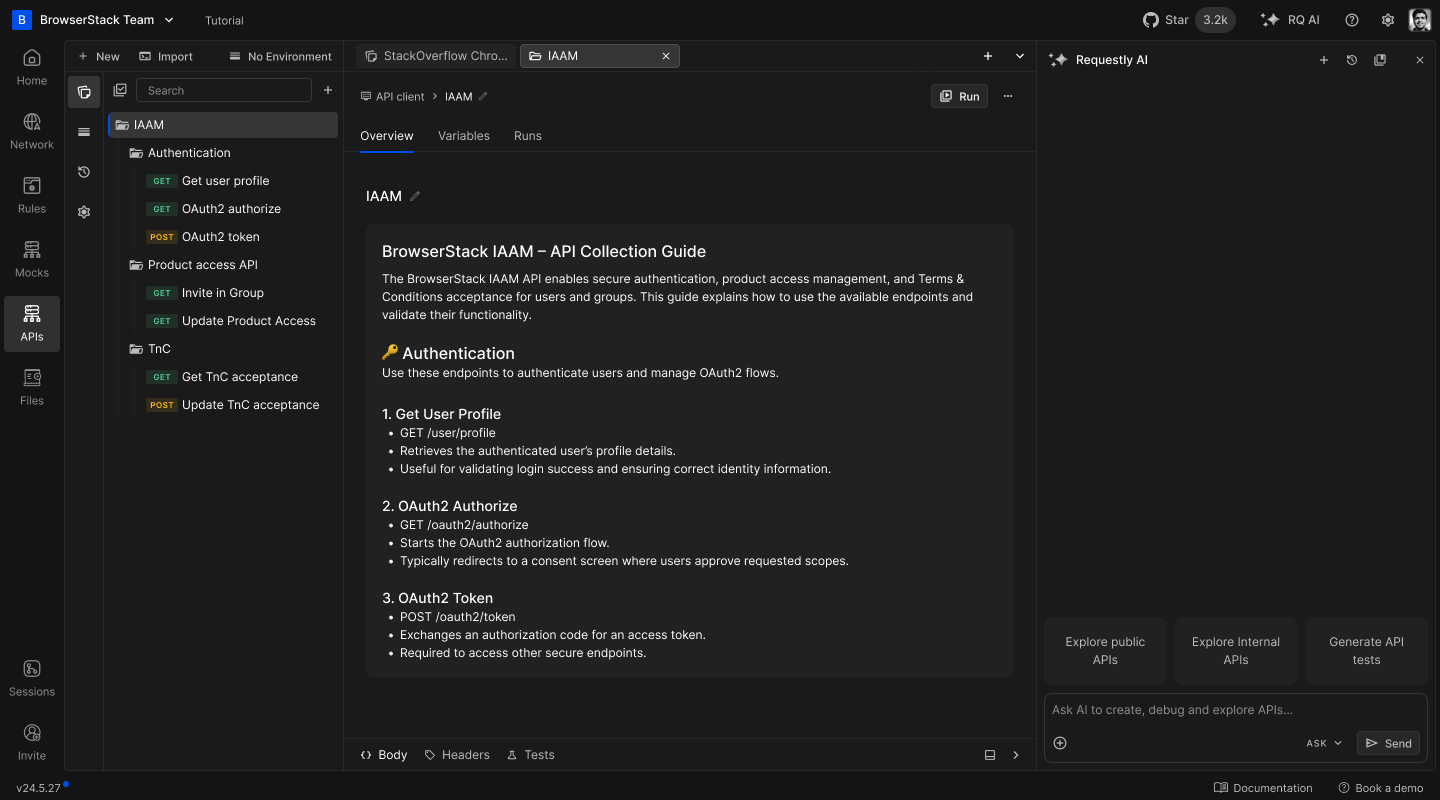
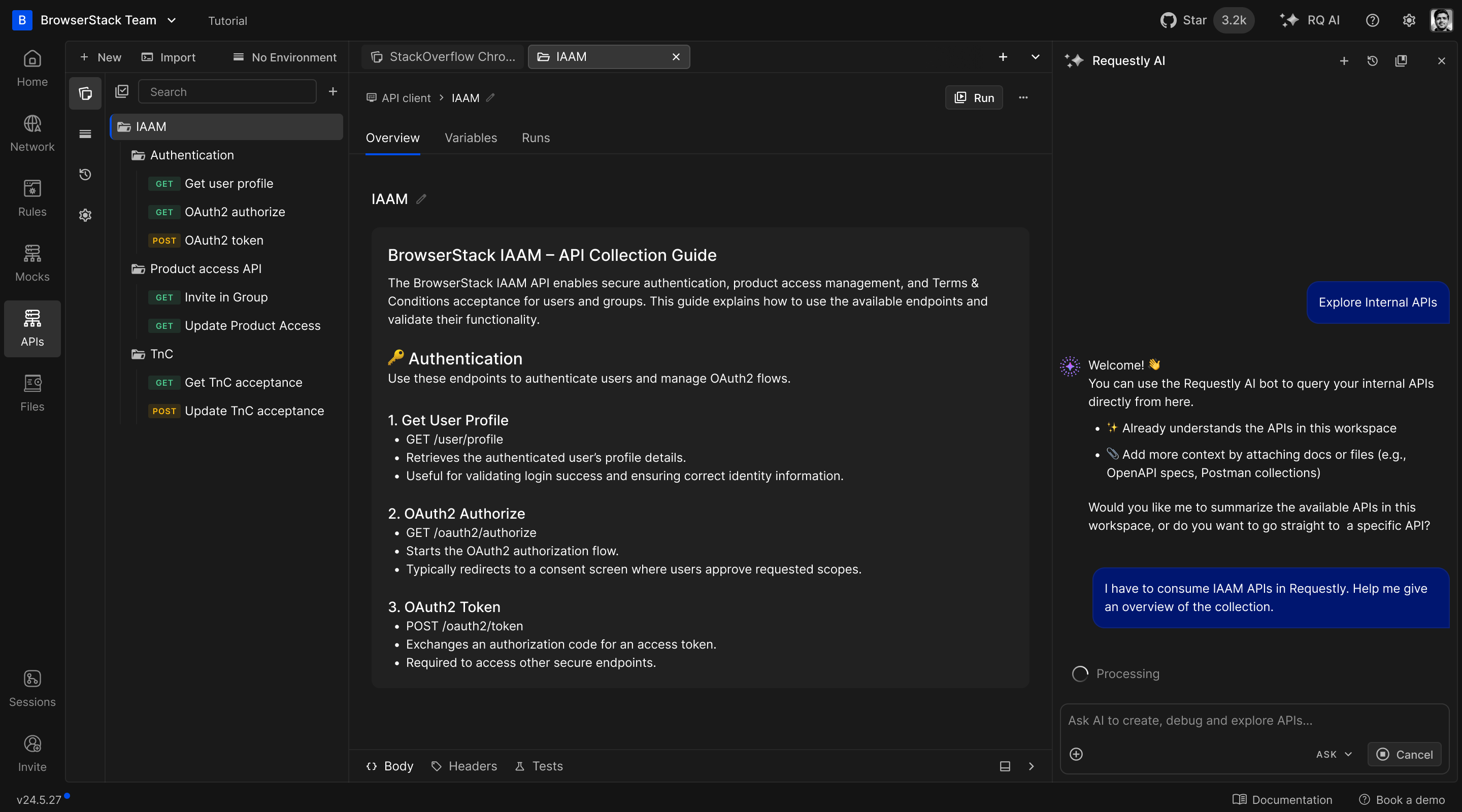
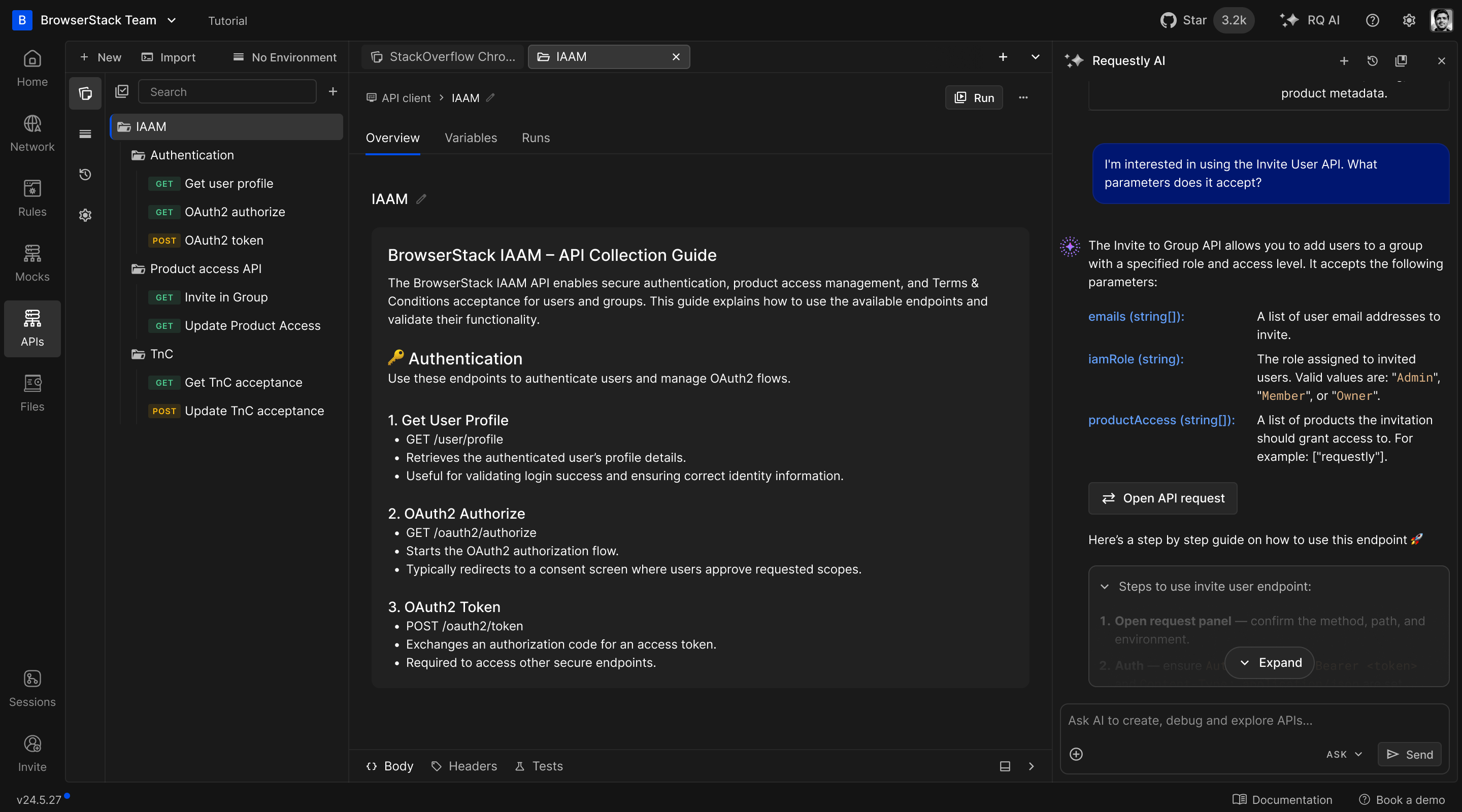
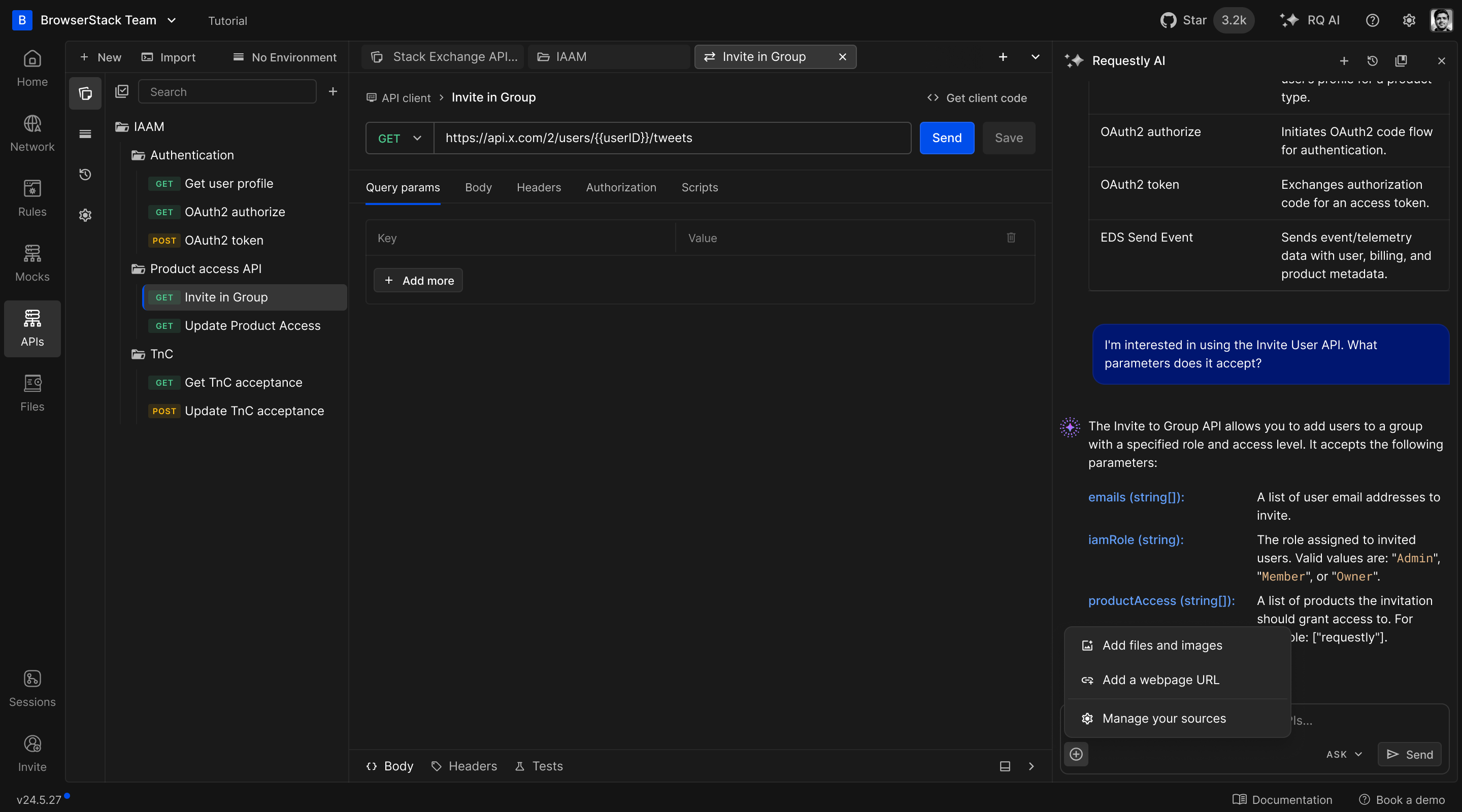
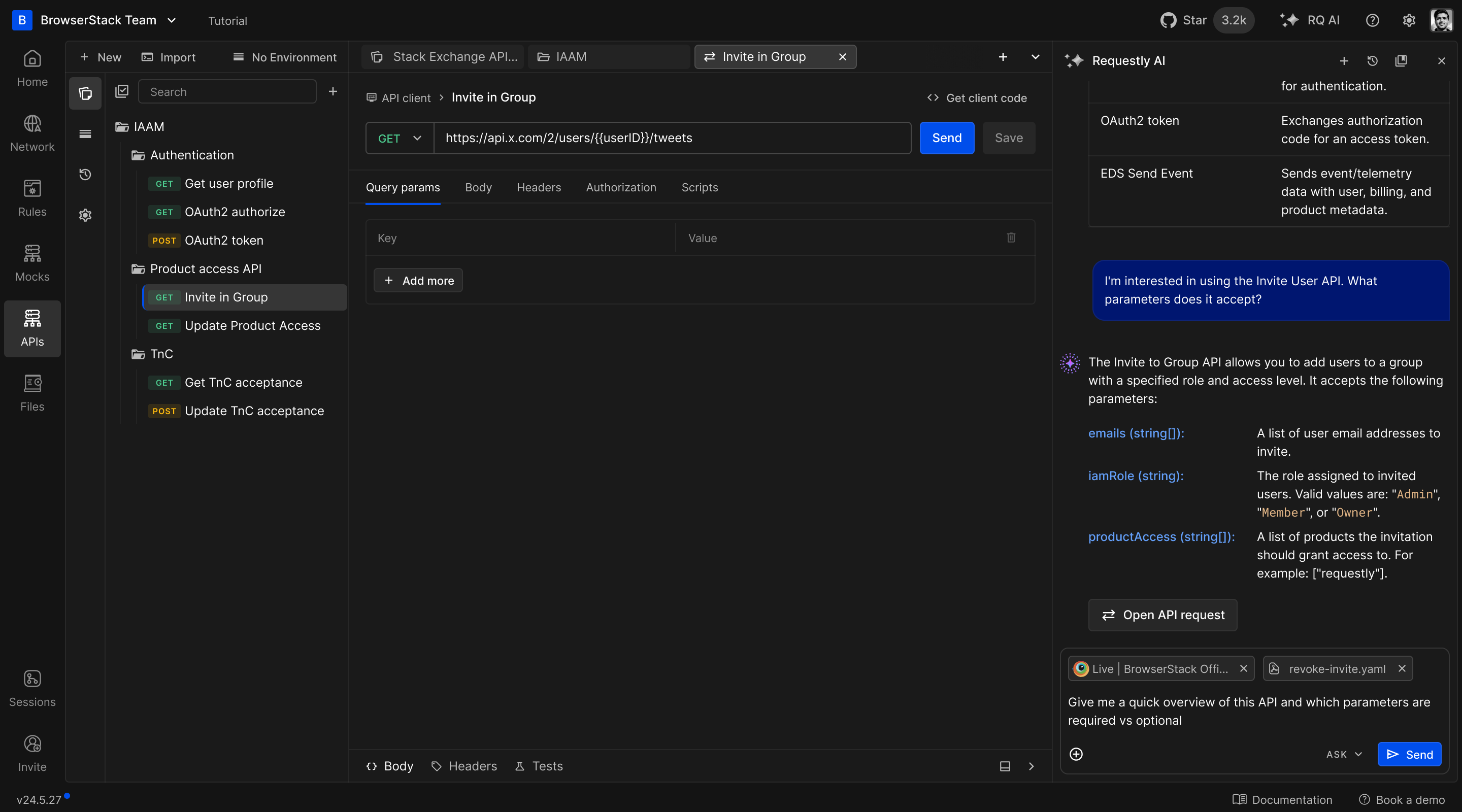
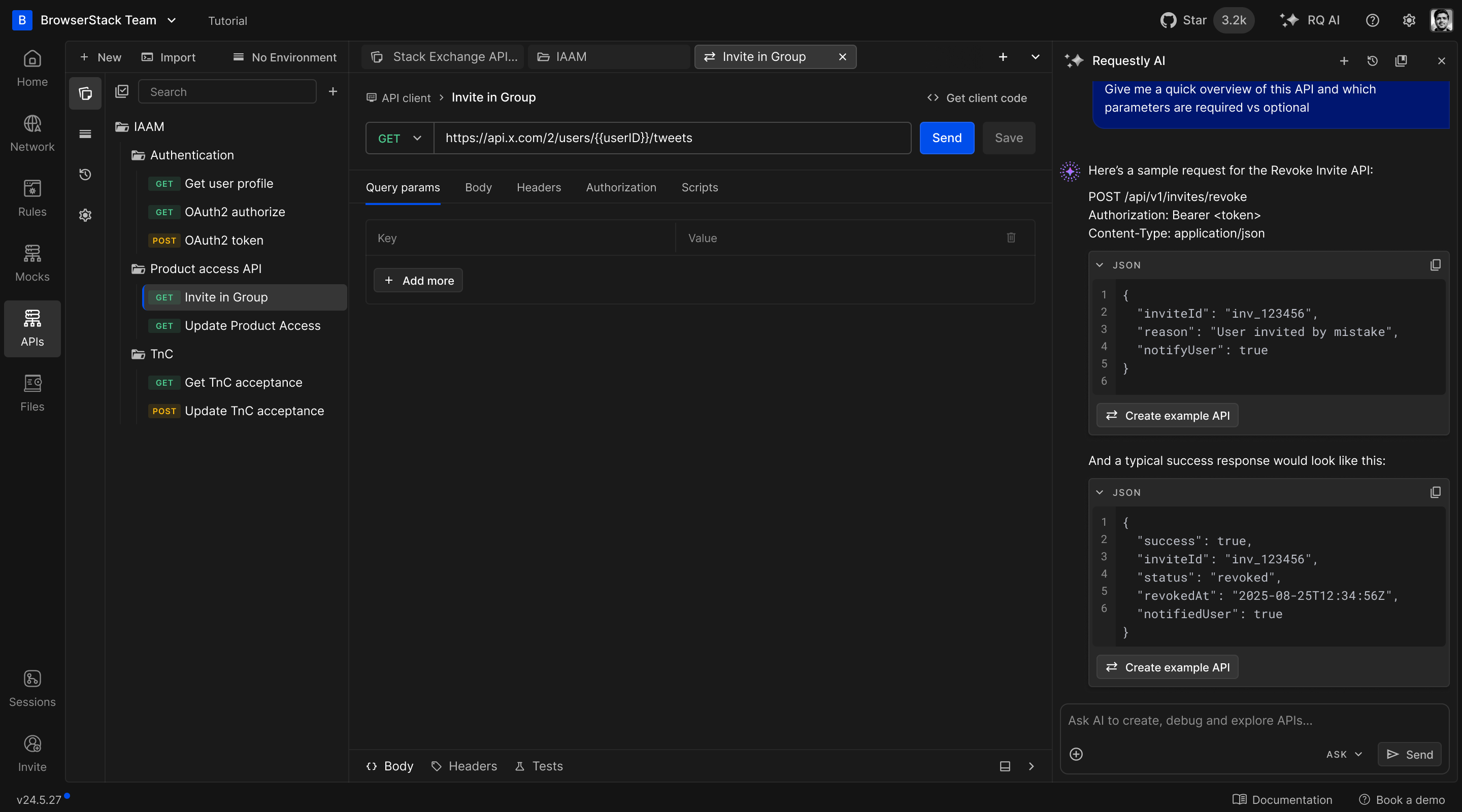
I designed an assistant that can create collections, edit requests, and write tests from a simple prompt. It understands the open workspace, shows the proposed changes, and waits for approval before updating anything.
Impact & reception
Community reviews
Developers and community reviewers began sharing the product on their own. Many described it as a faster, cleaner alternative to the heavier tools they had been using.
Onboarding with no signup
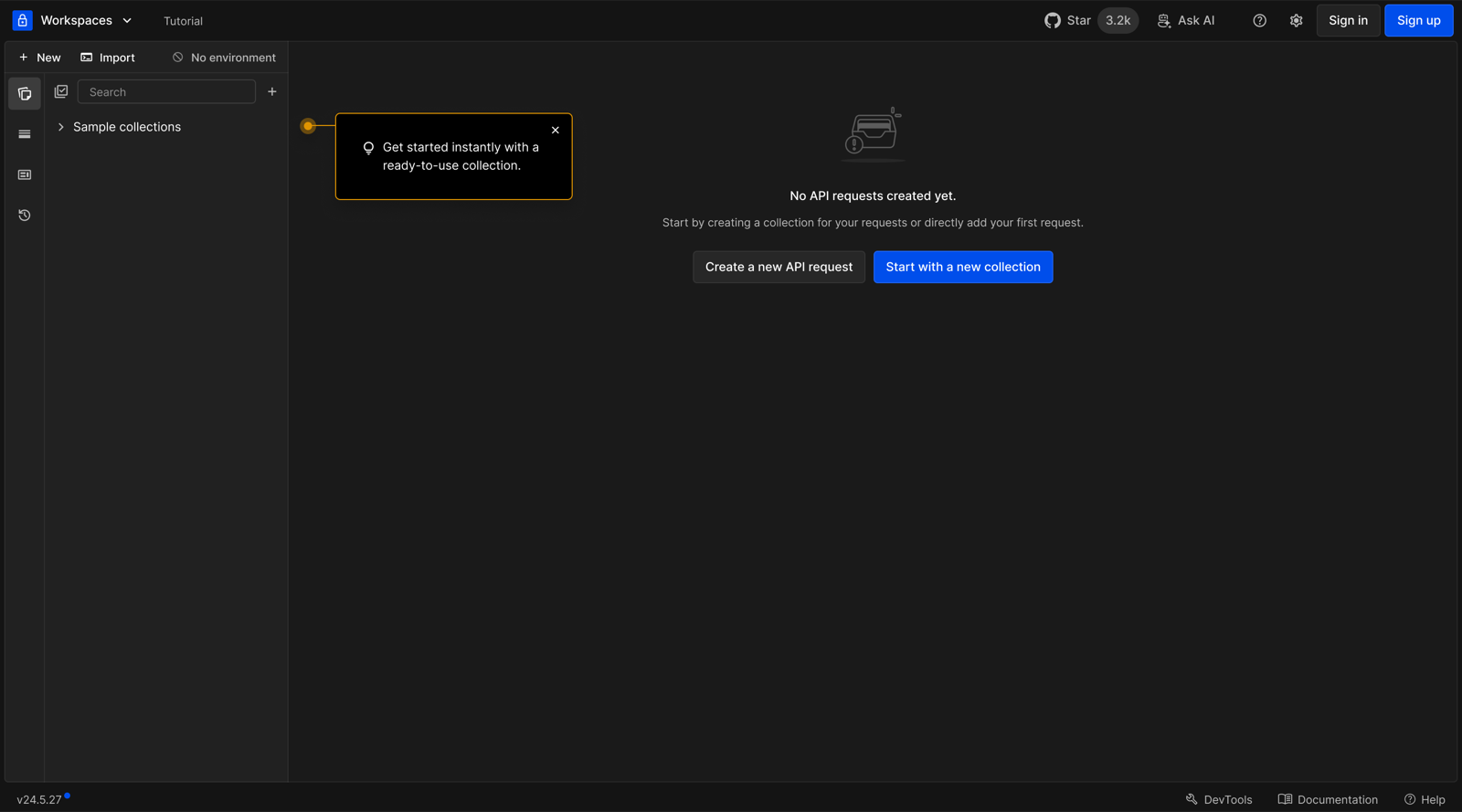
Developers can open the app, import a collection, and send a request without creating an account first.
More control over API data
Local collection files gave teams a clear way to keep API work on their own machines and manage it through Git.
One connected API workflow
Request testing, automated runs, mocking, and live traffic now sit together instead of being split across separate tools.