
Designing a customer support platform for businesses.
Saturn was an experimental product outside our existing product line. We combined the familiar channel-based experience of Slack with the customer-support workflow of Intercom, then built an MVP for businesses to manage support conversations and add a branded widget to their website or application.
Goals
Explore a different way for businesses to manage customer support. Instead of keeping every conversation inside a conventional ticket inbox, we wanted companies and customers to communicate through familiar channels, while still giving support teams the controls needed to manage requests.
Quick background
Saturn started as an experiment beyond our regular products. The idea was simple: combine Slack-style conversations with Intercom-style customer support. A business could create public and private channels, manage incoming support messages, and place the same experience inside its website or application through a widget.
We decided to build an MVP and put it in front of a few internal users. The purpose was not to launch a complete support platform immediately. We first wanted to see whether the connected admin-and-widget experience was useful and understandable.
The problems we wanted to solve
Support and conversation felt separate: We wanted customer support to feel closer to an ongoing conversation than a series of isolated tickets.
Different conversations needed different spaces: Public discussions, private customer channels, direct messages, and help requests needed one clear structure.
Support teams still needed operational control: The admin experience had to support filtering, assigning, flagging, resolving, and reviewing customer information.
The customer experience had to work inside the product: Businesses needed a widget that could match their brand and support both signed-in users and public website visitors.
What I did
Defined the MVP experience: I translated the early product idea into connected workflows for business admins and their customers.
Designed the main product areas: This included sign-up, first-time setup, widget installation and appearance, admin conversations, inbox actions, channels, customer details, mobile views, and the embedded widget.
Covered complete states: I designed empty and loading states, active conversations, filters, assignment and resolution feedback, public and private channels, email capture, and outbound messages.
Validated the MVP: We shared the working product with a few internal users and collected their reviews and comments. Their response to the concept was positive.
Sign-up and first-time setup
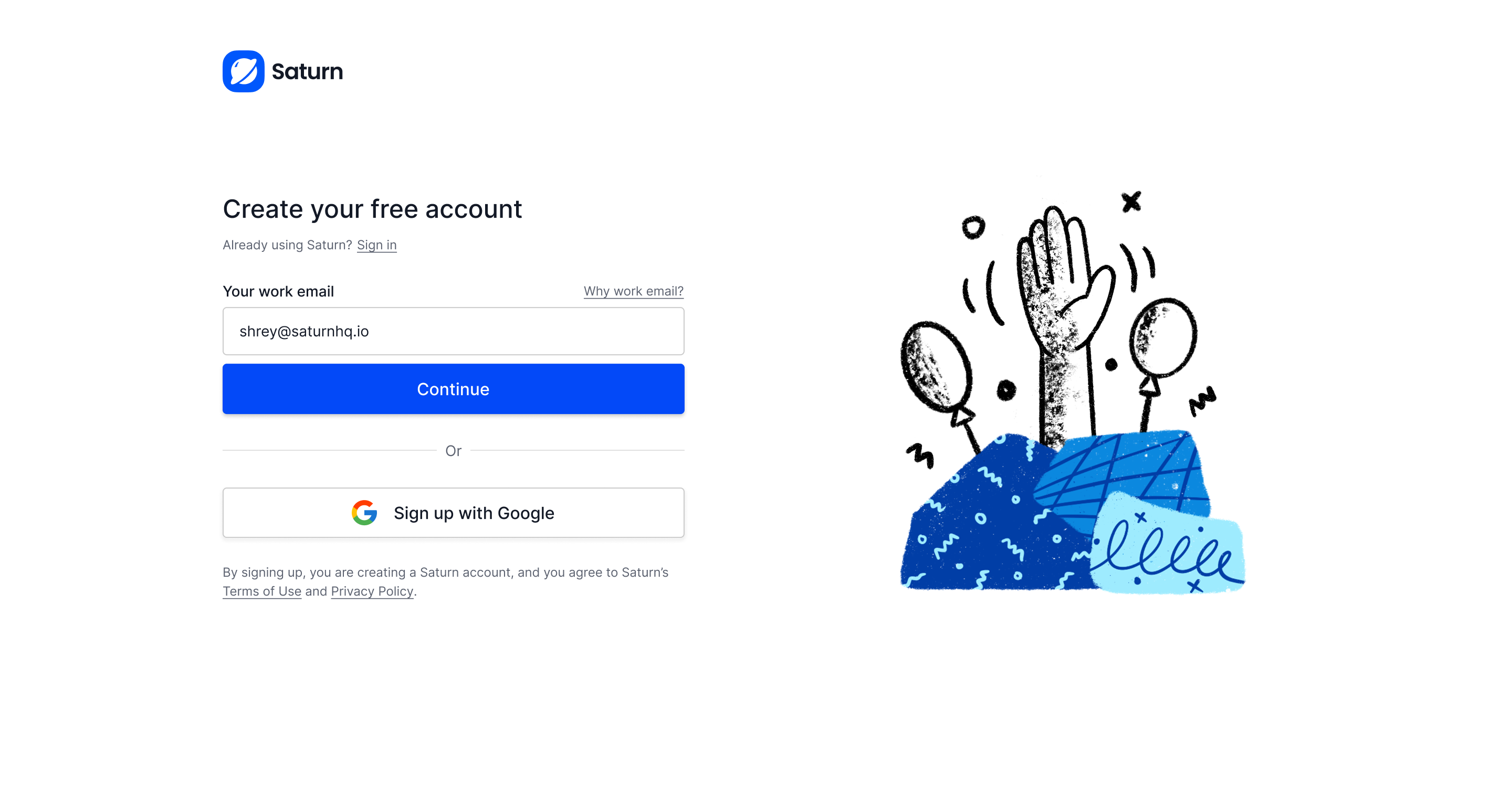
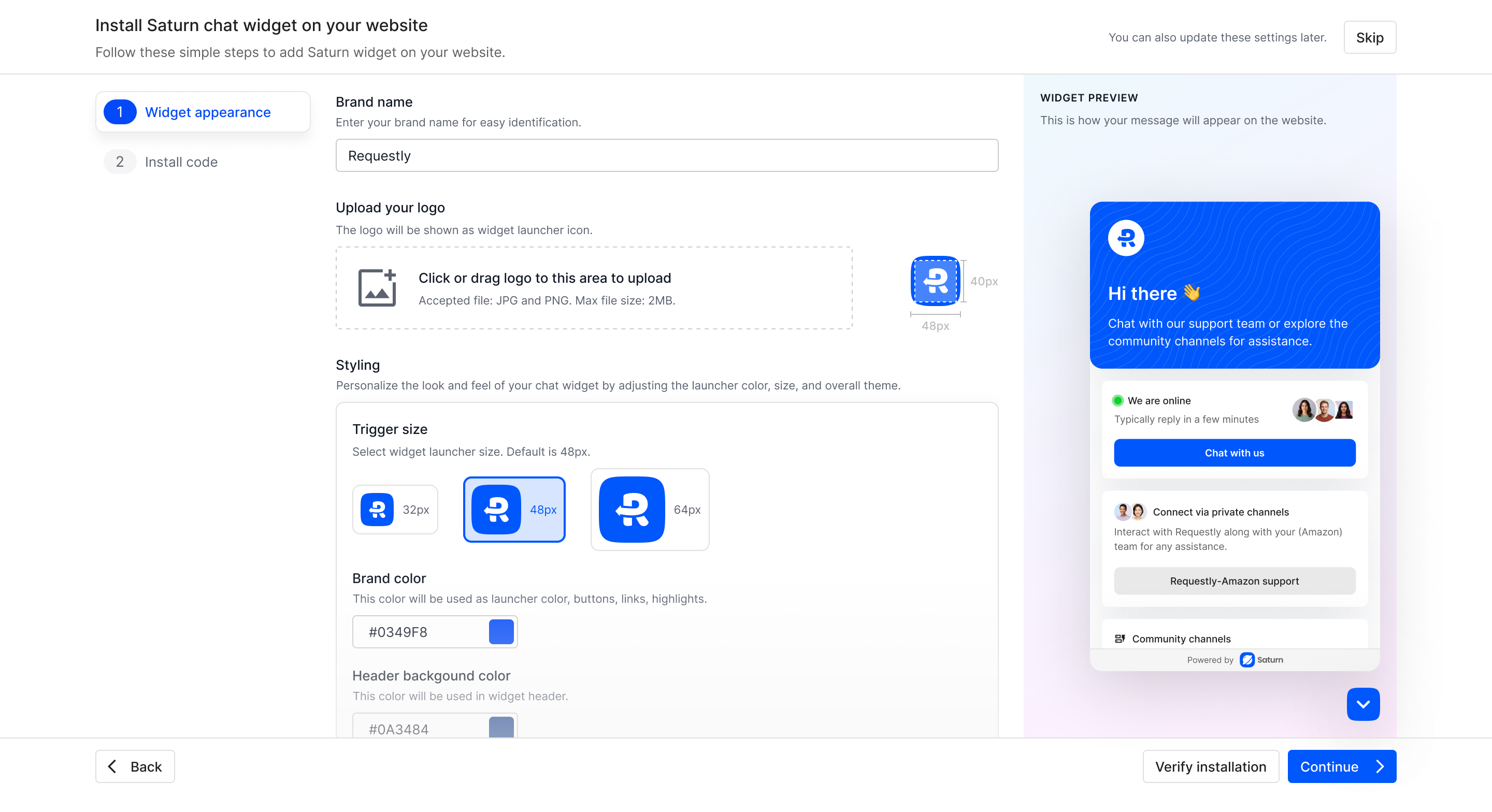
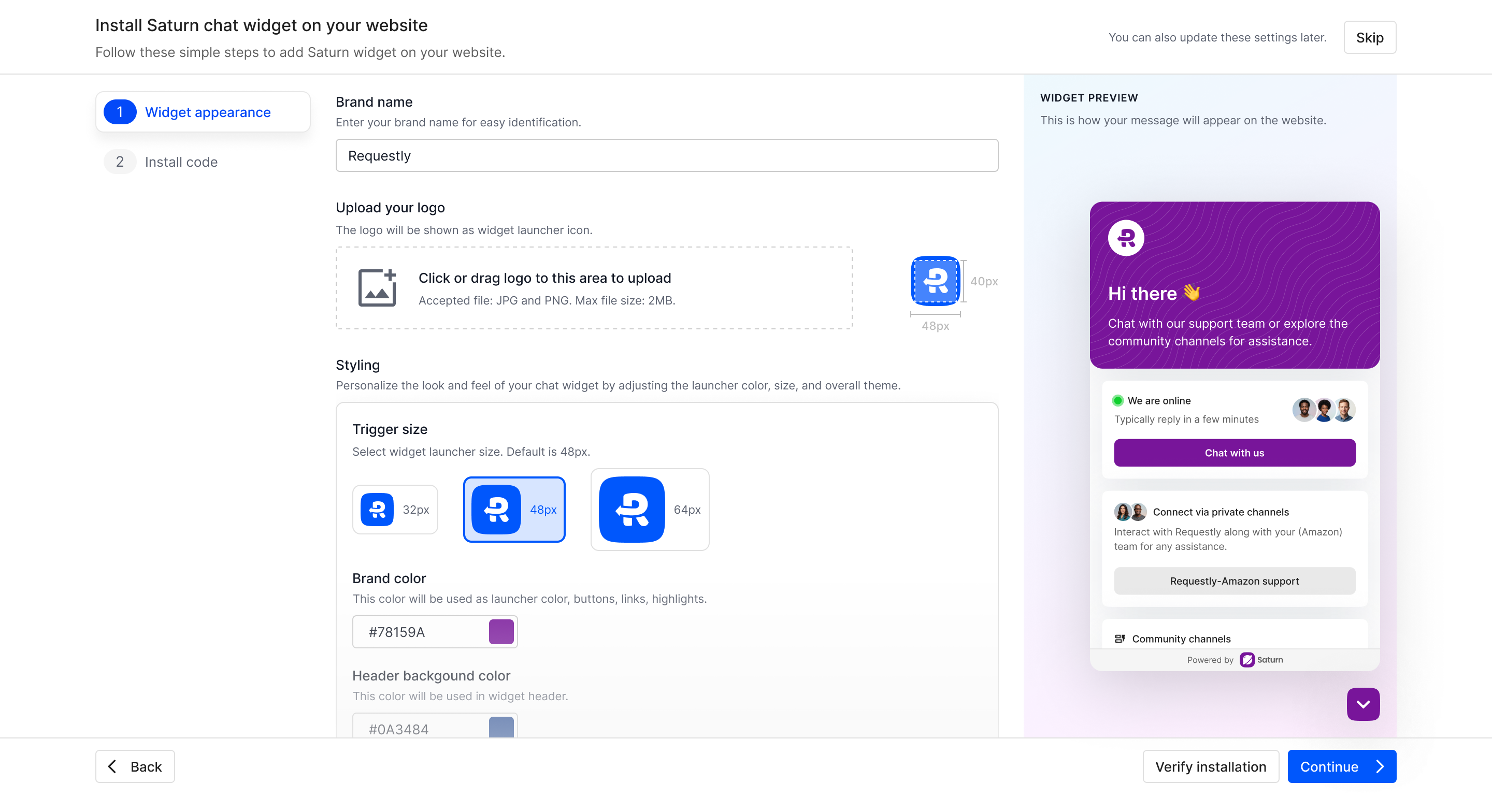
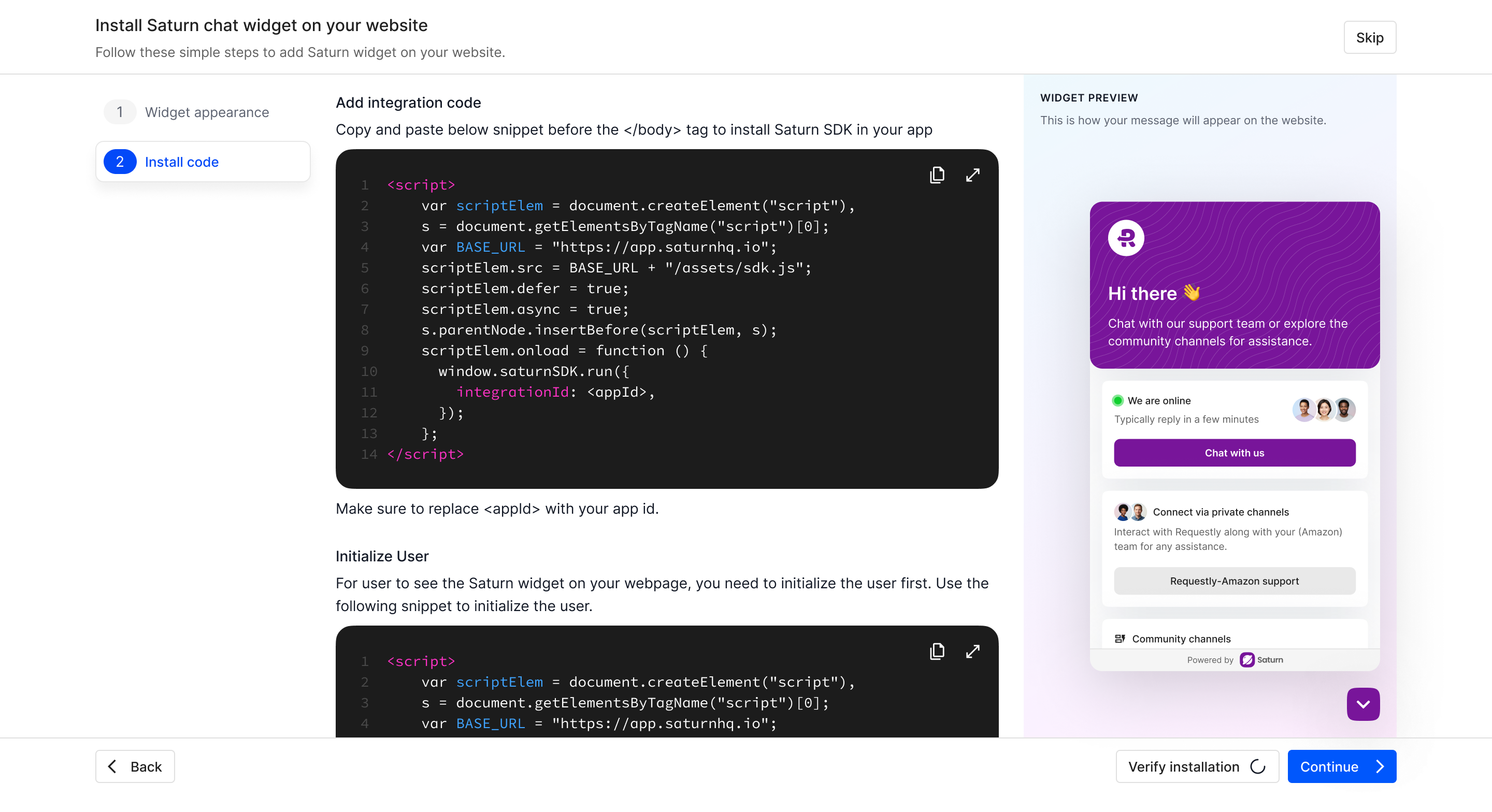
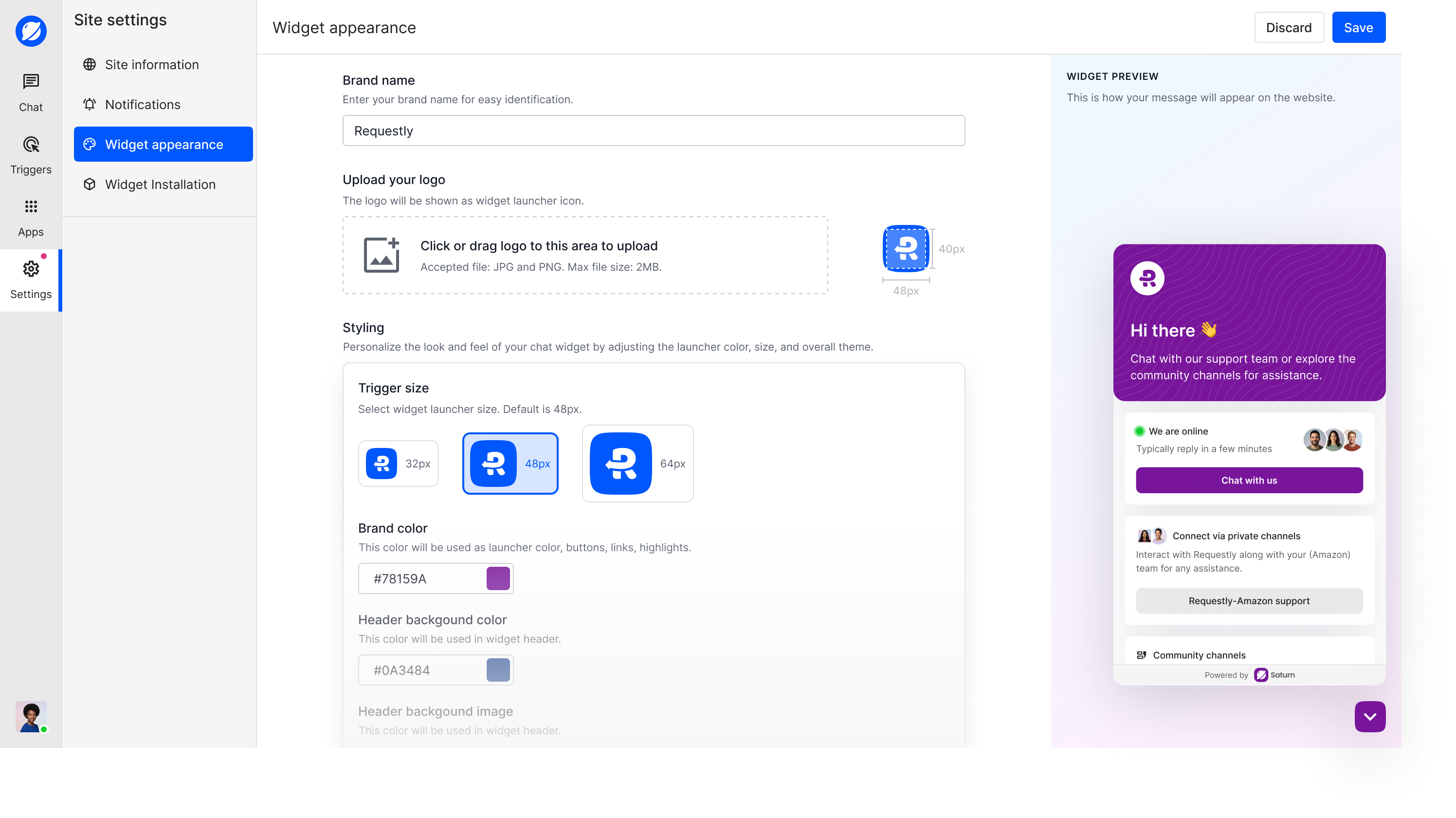
The setup flow helps a business create an account, adjust the widget to match its brand, install the provided code, and enter a new workspace. The same appearance controls stay available later in settings.
Admin workspace and customer context
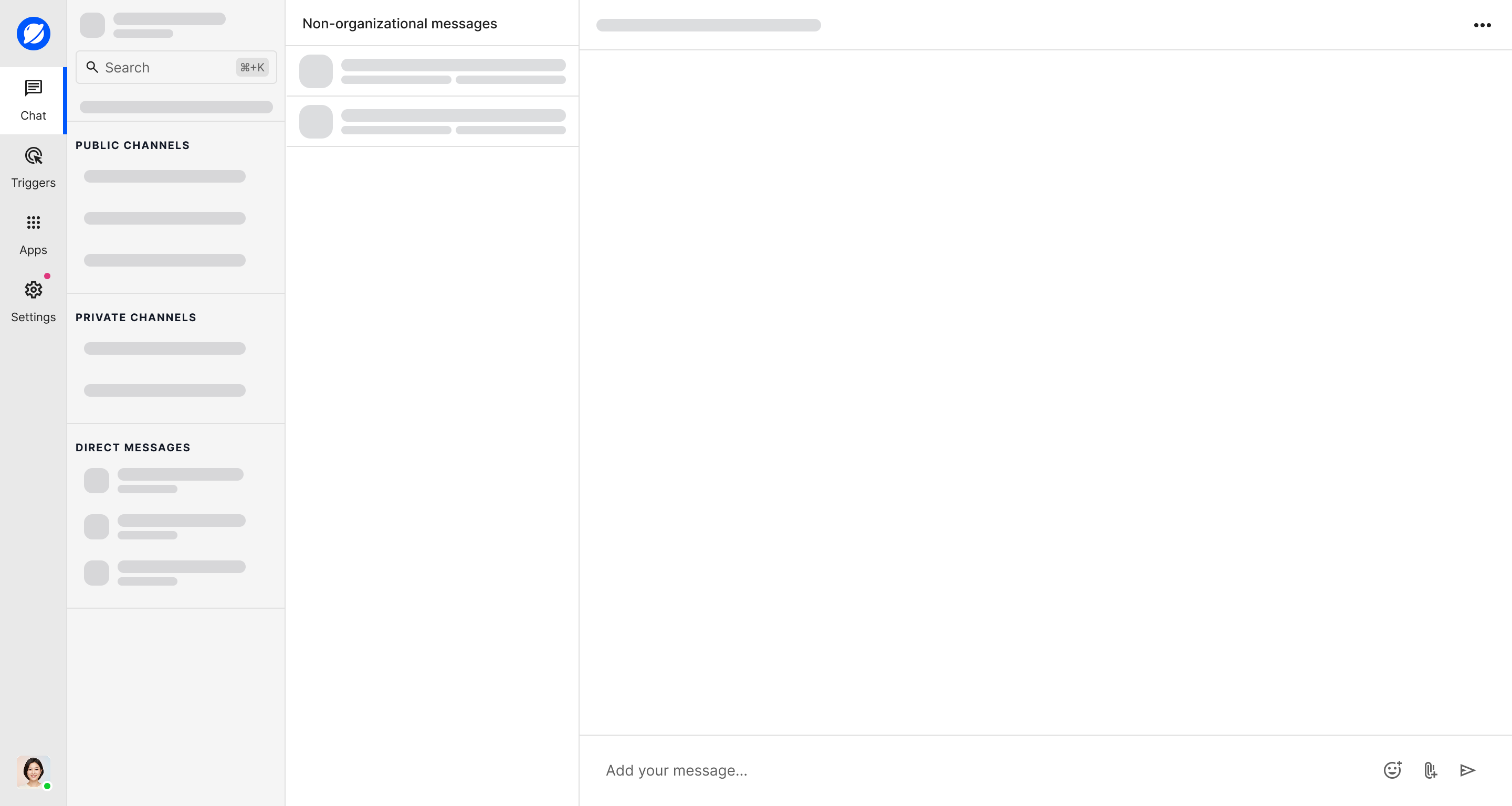
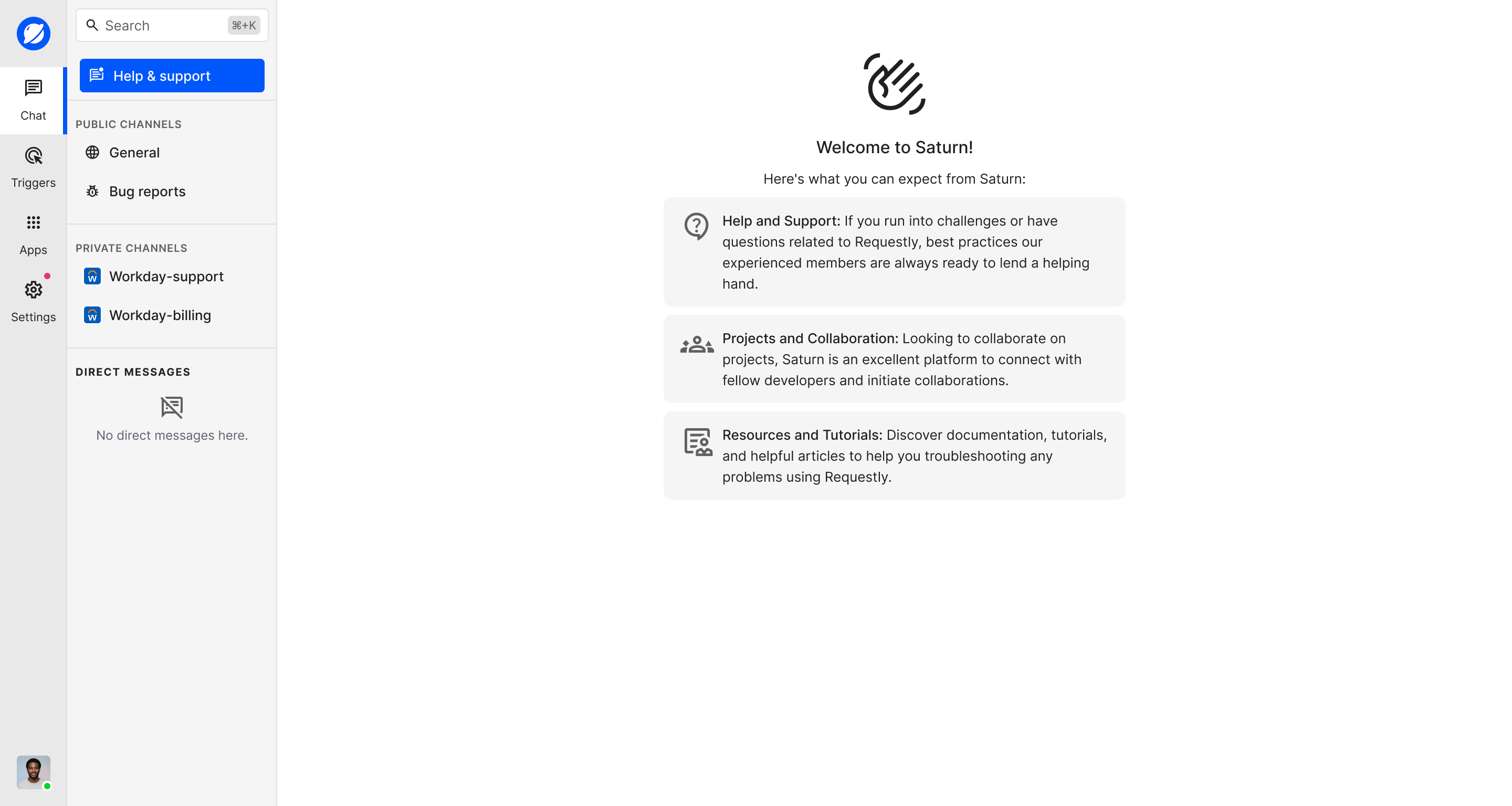
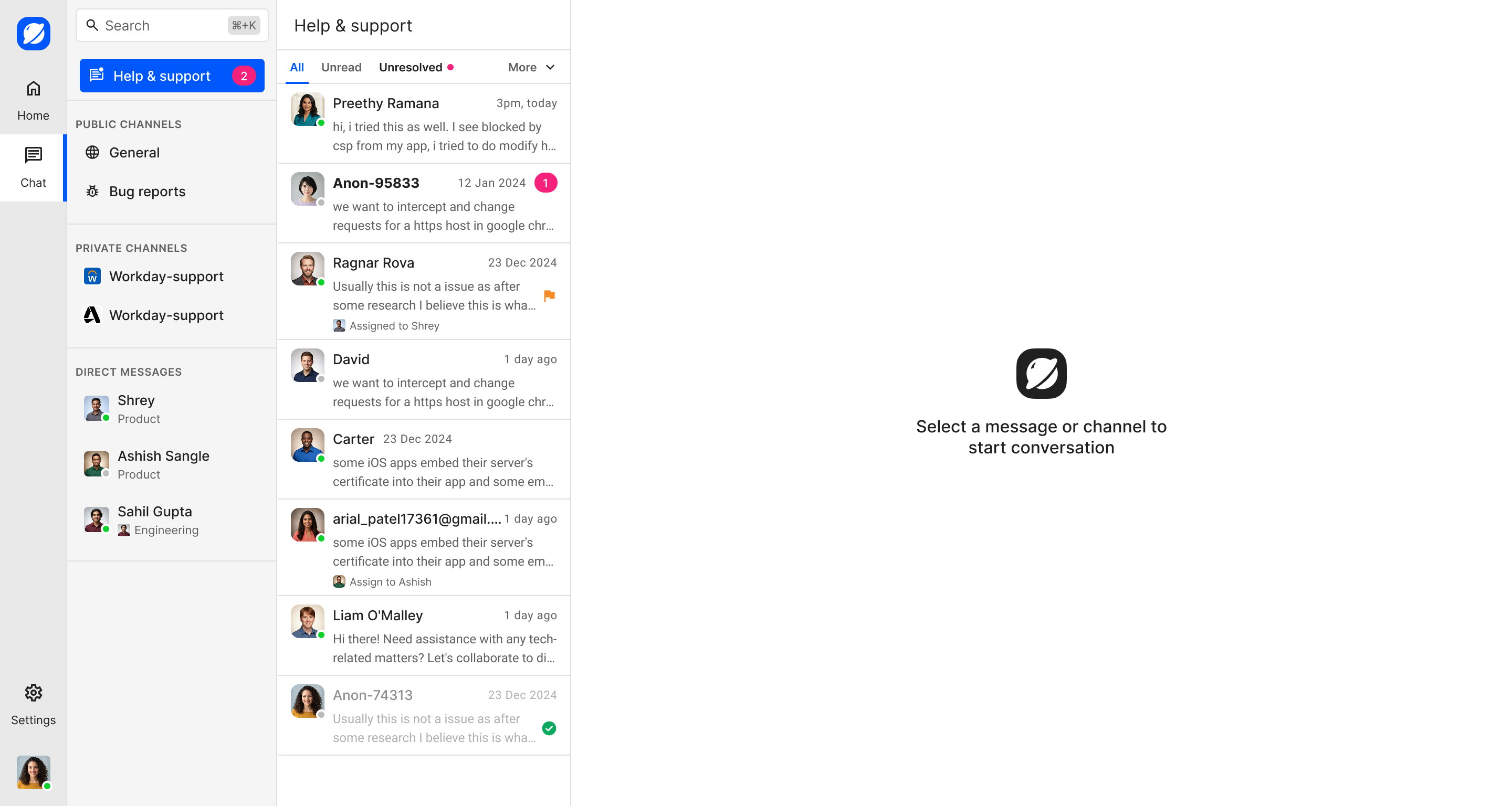
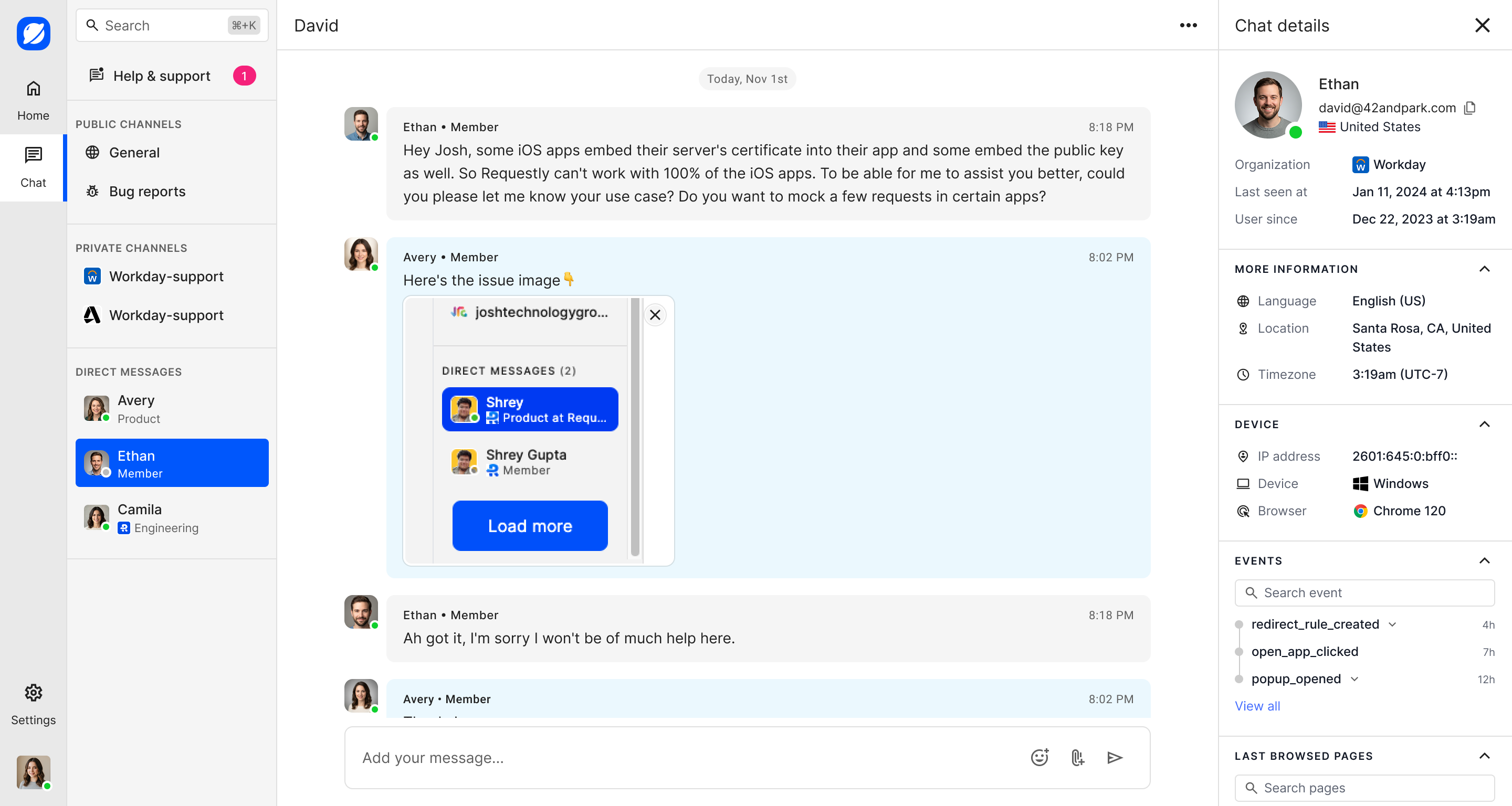
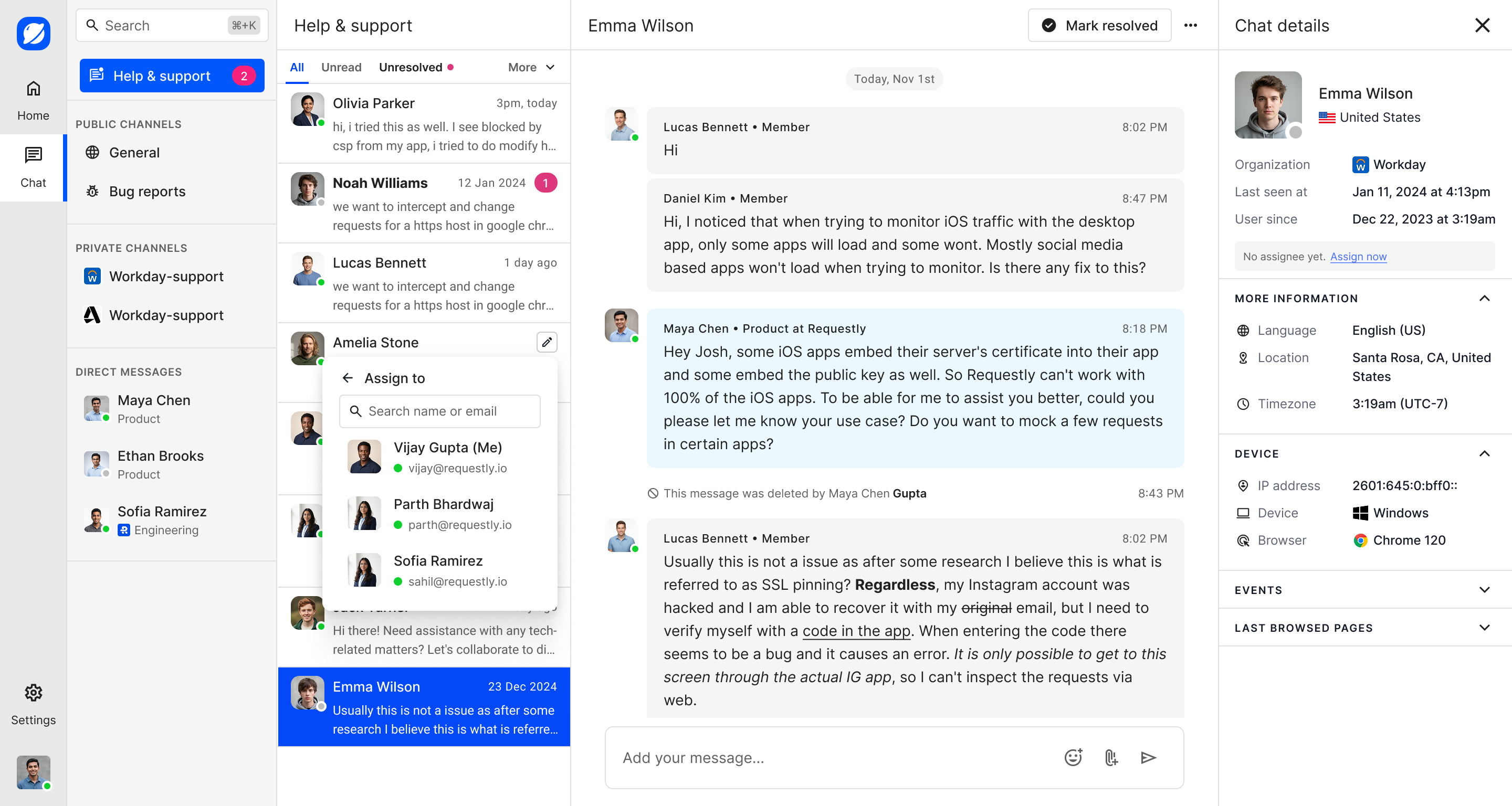
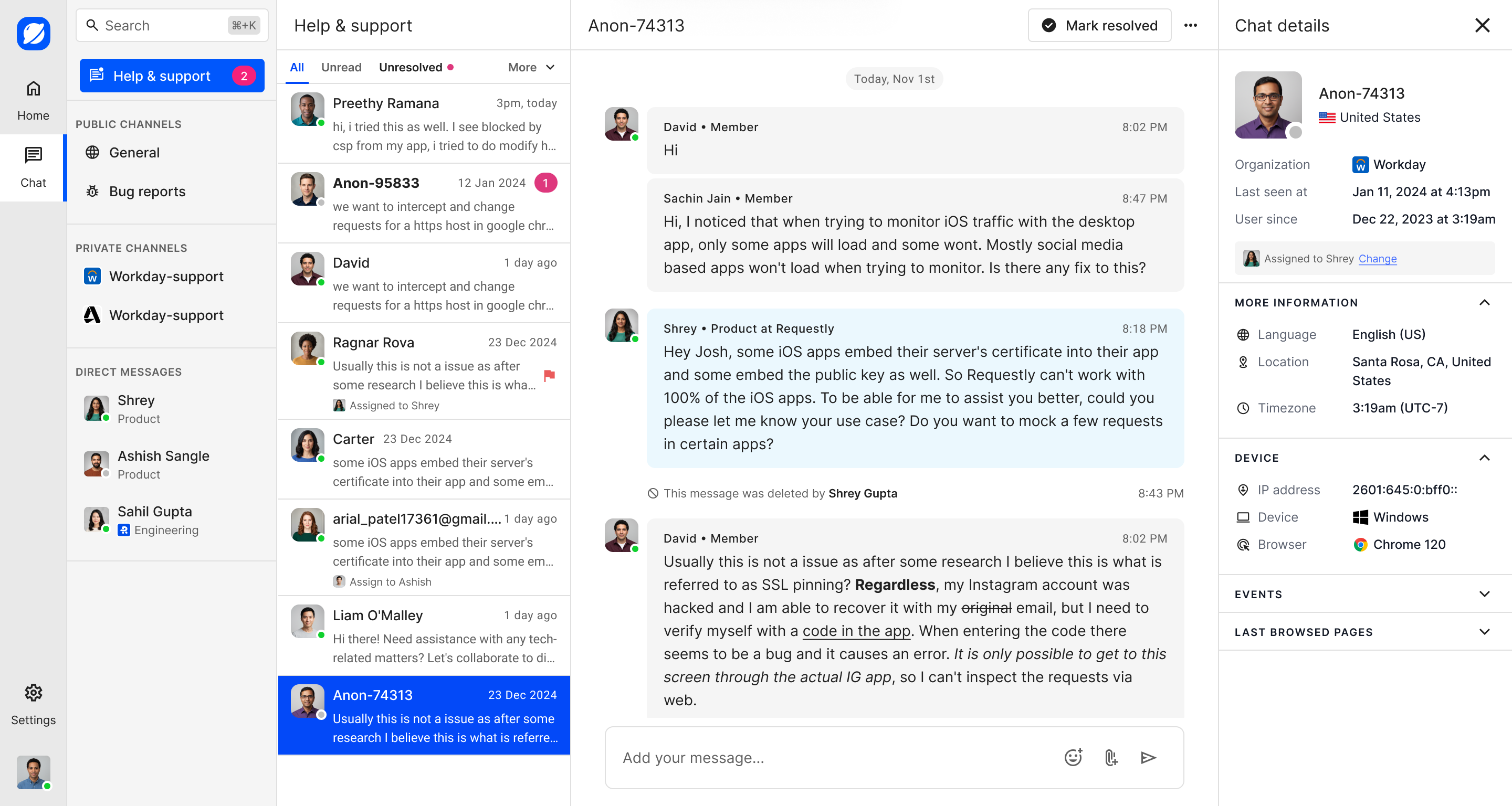
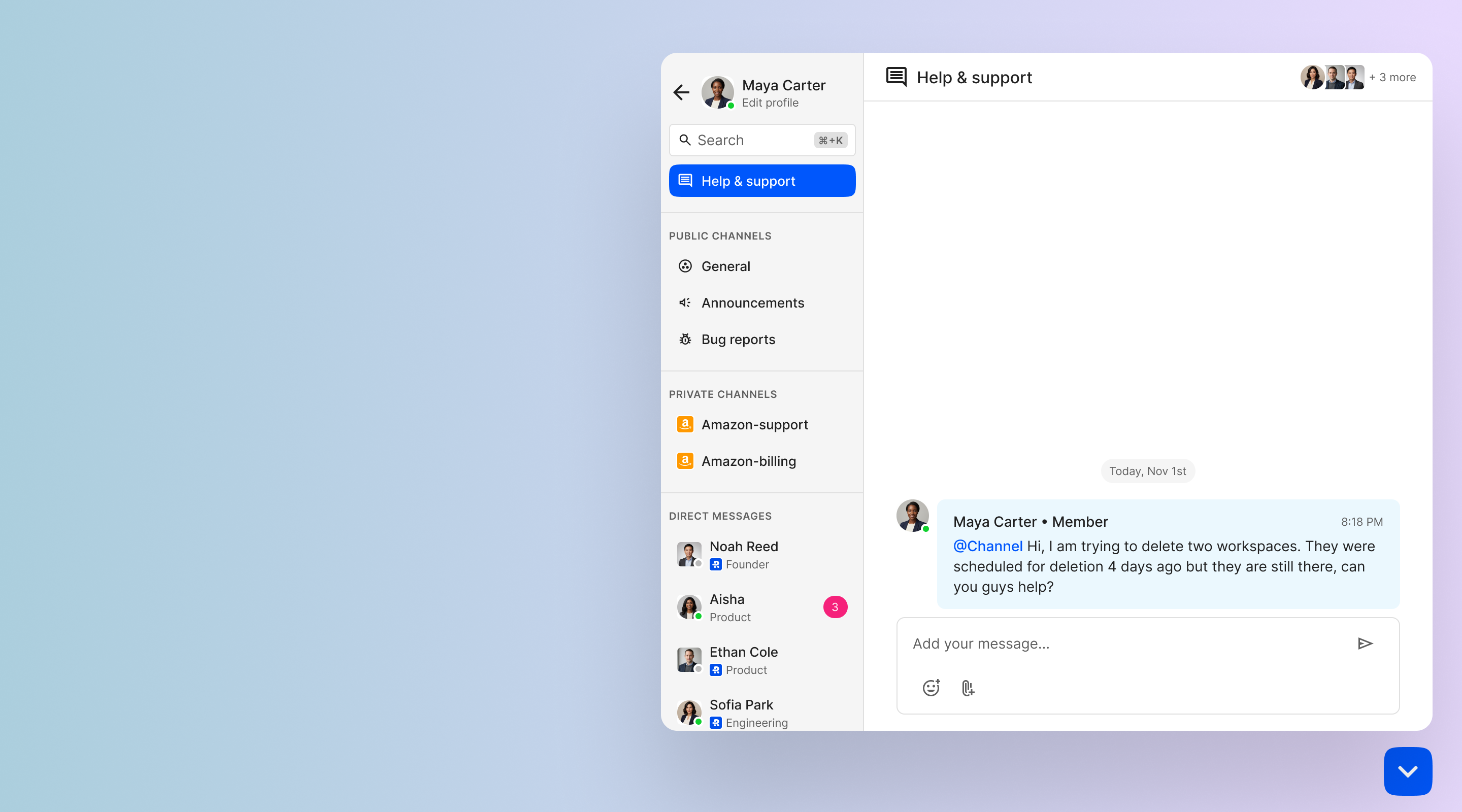
The admin workspace brings support, channels, and direct messages into one place. A support person can open a conversation and view the customer's profile, contact information, device details, and recent activity alongside the discussion. The responsive views keep the main conversation, navigation, user details, and threads available on mobile.
.png)
 -- Sidebar.png)
-1.png)
.png)
Support inbox and message management
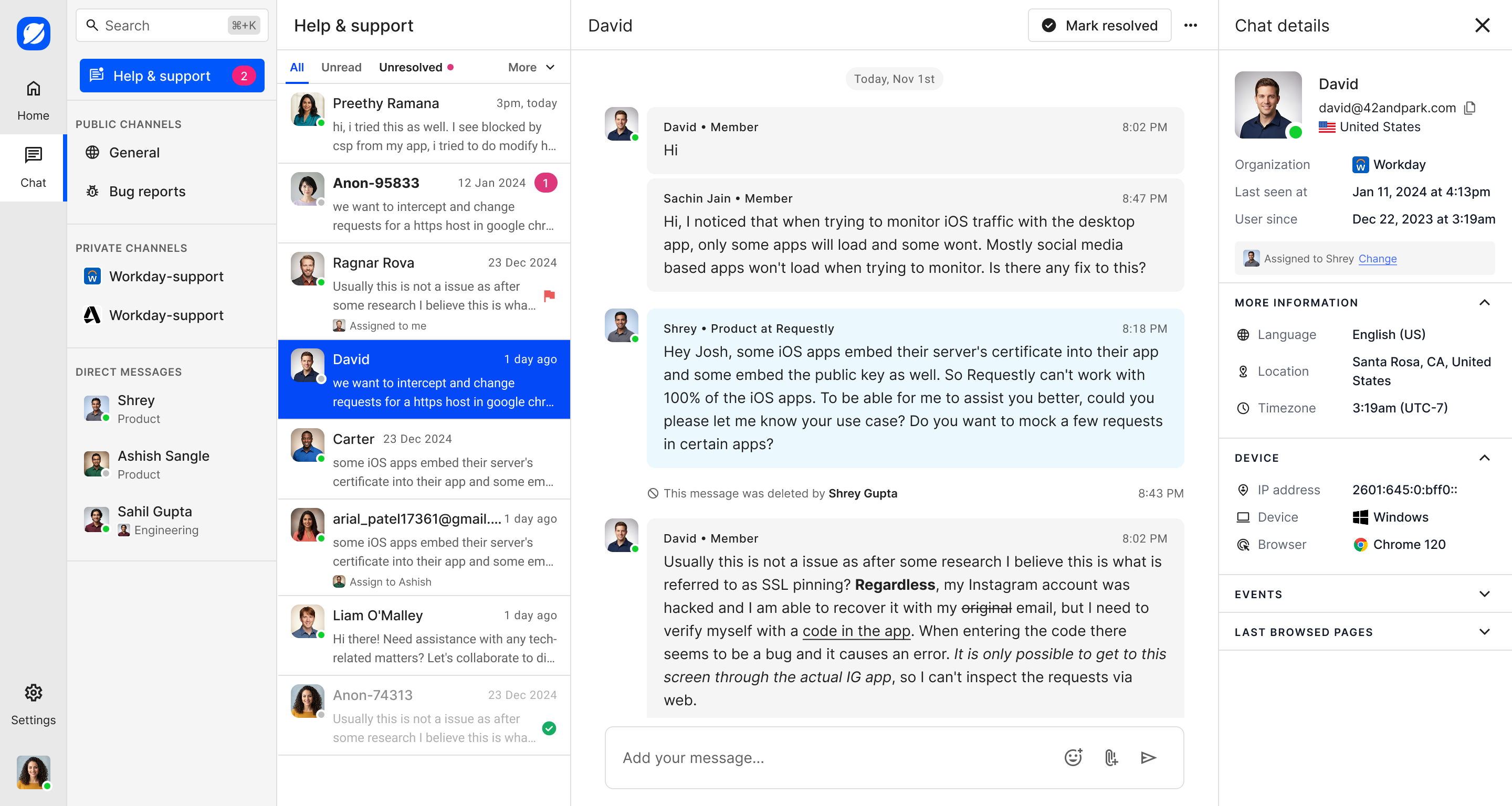
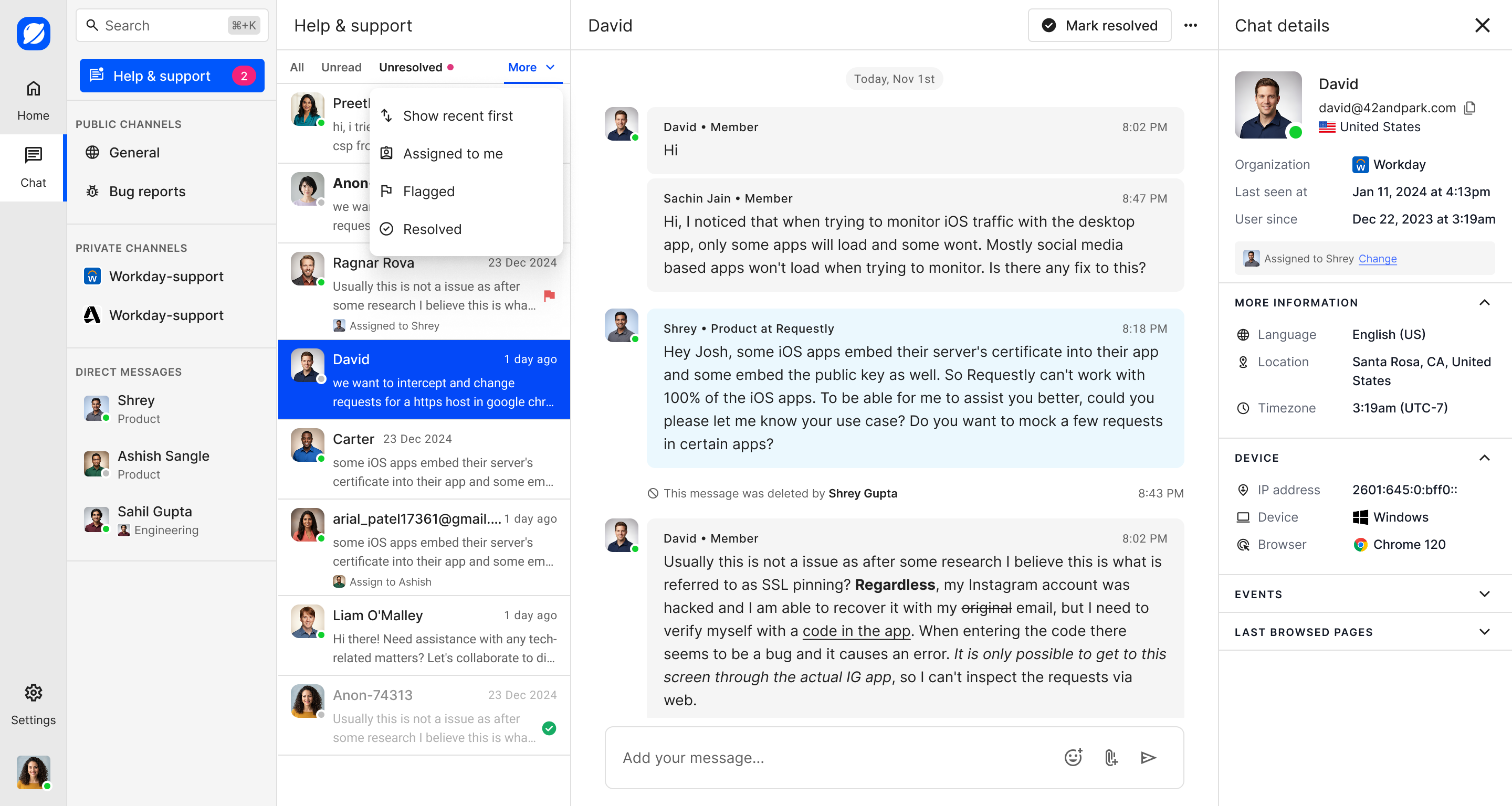
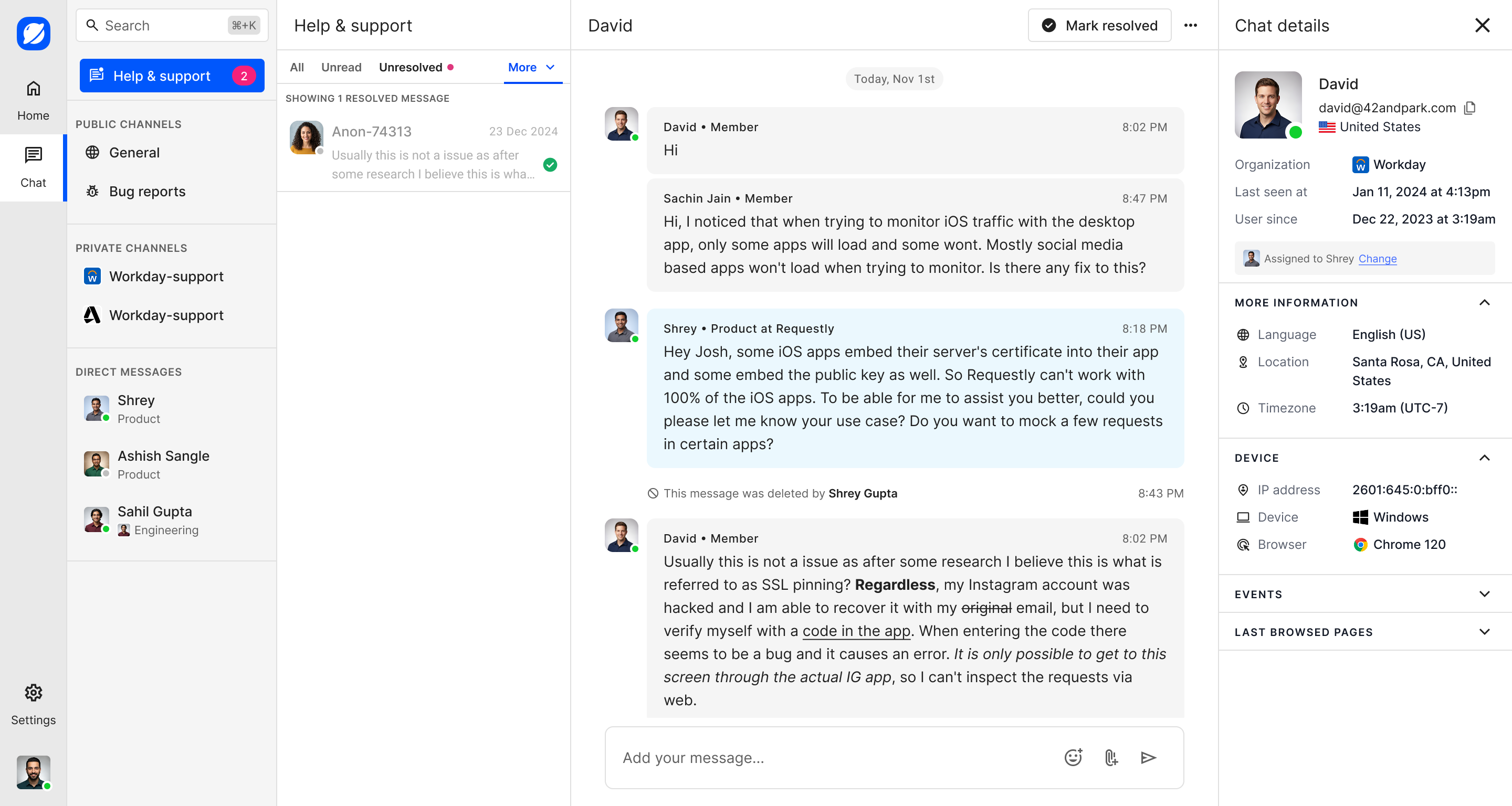
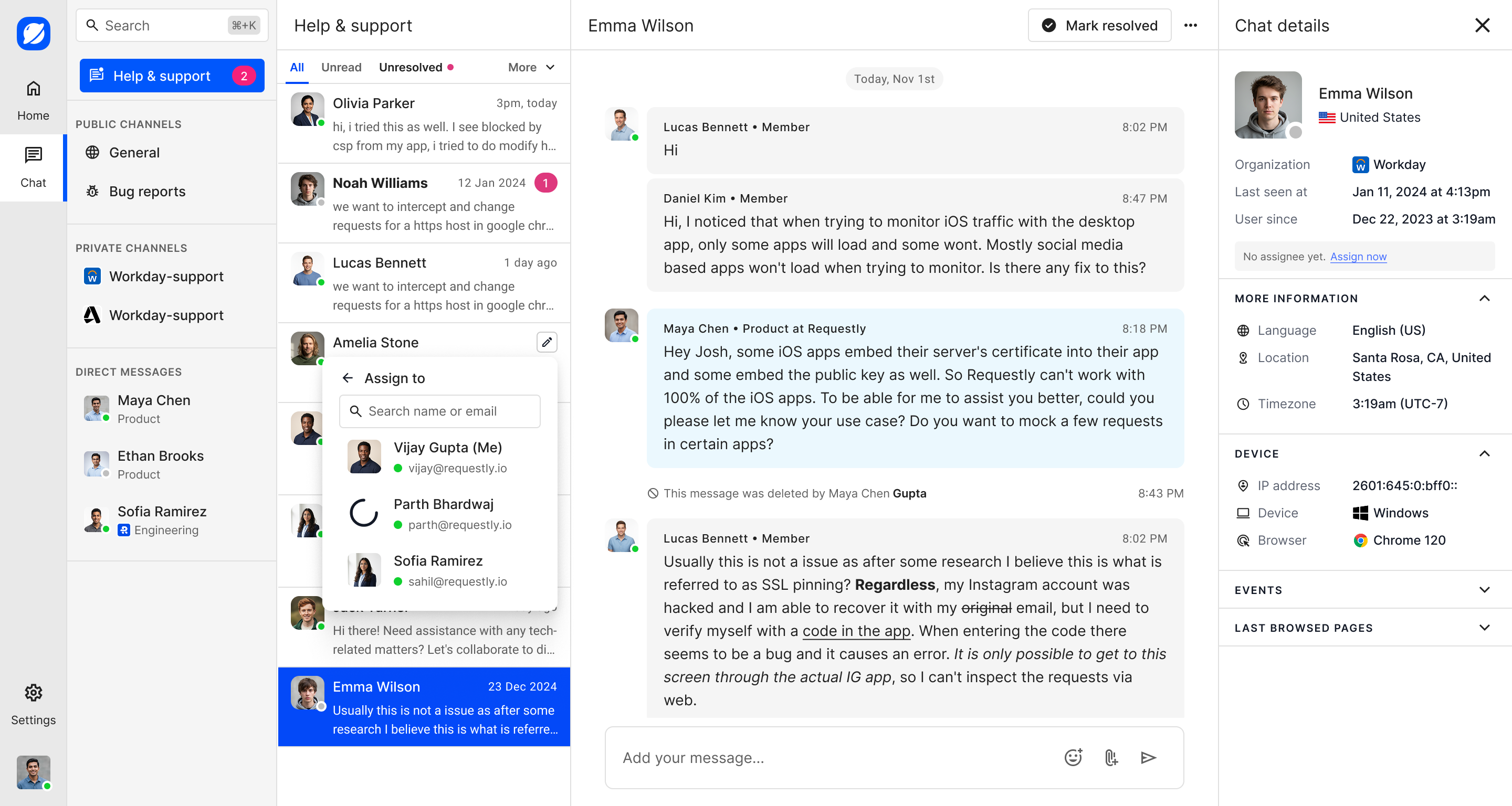
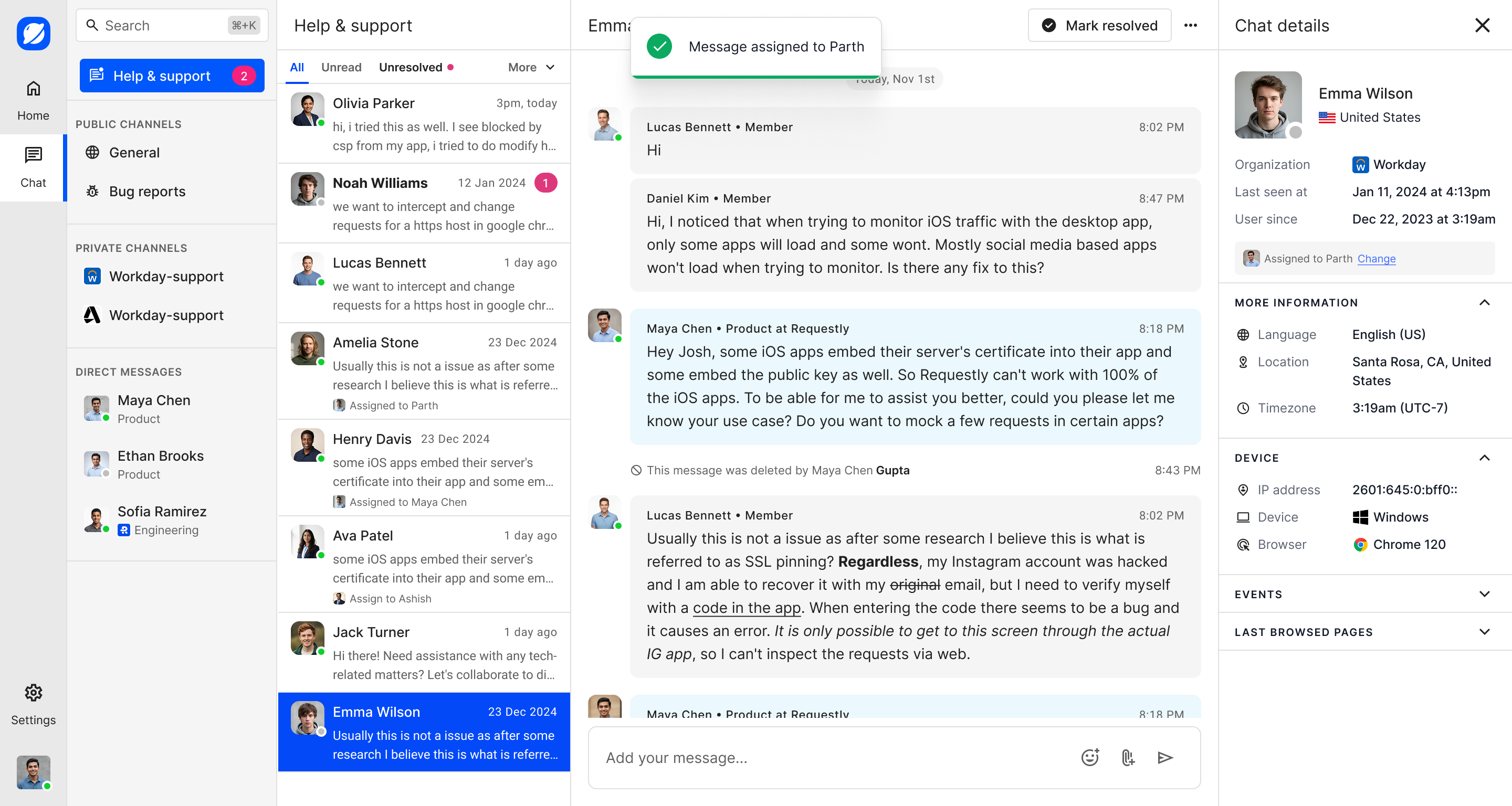
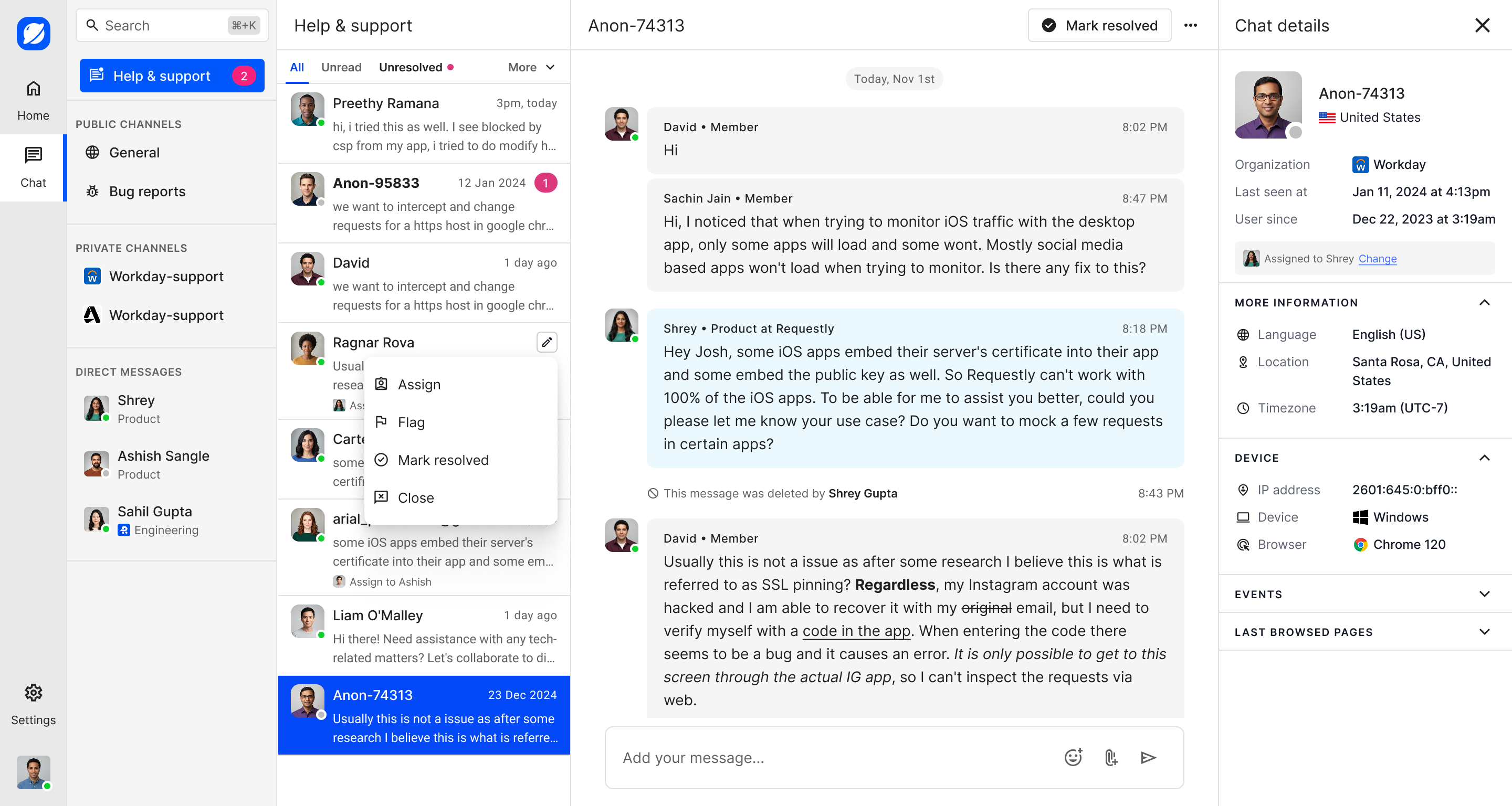
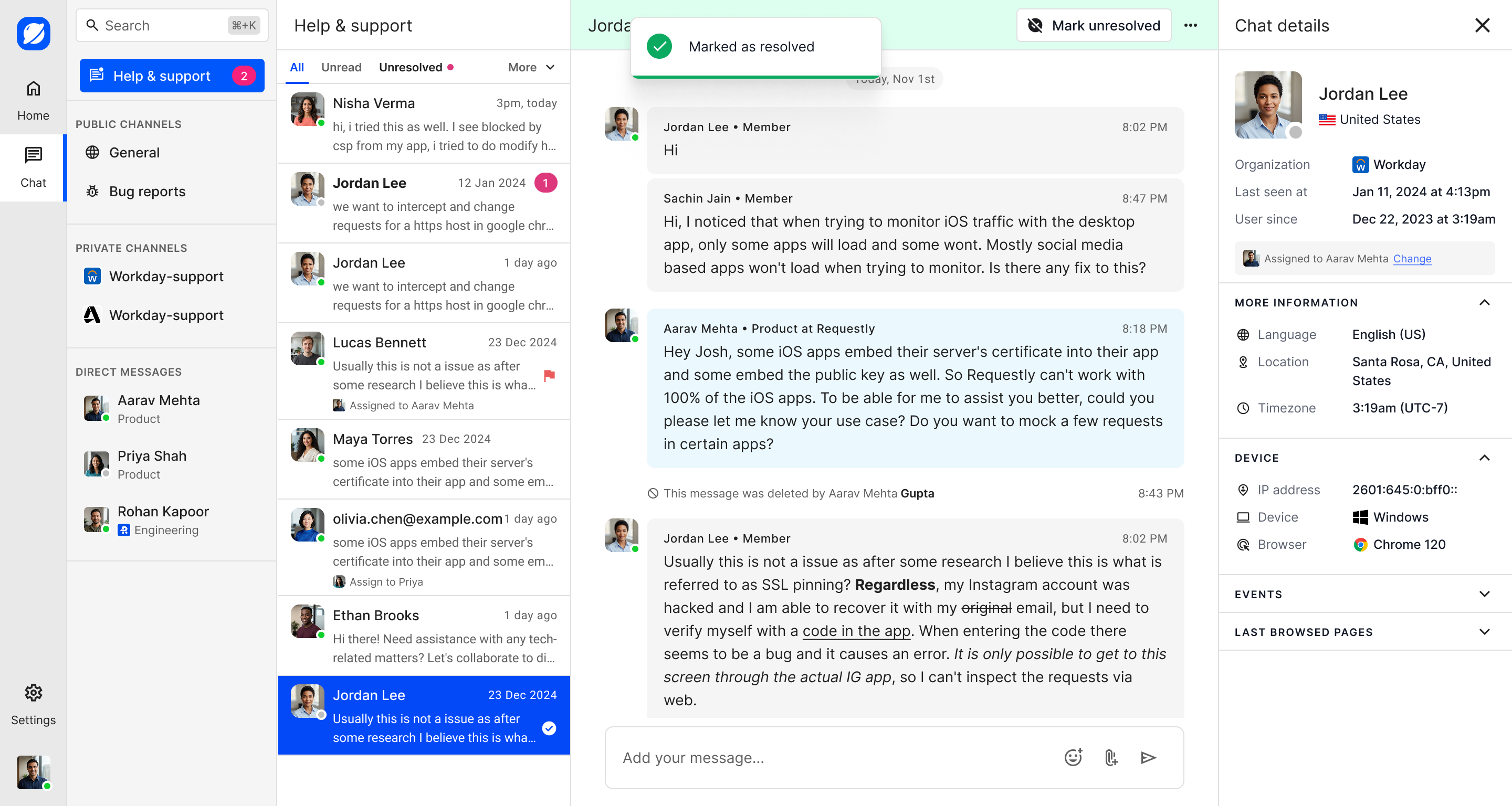
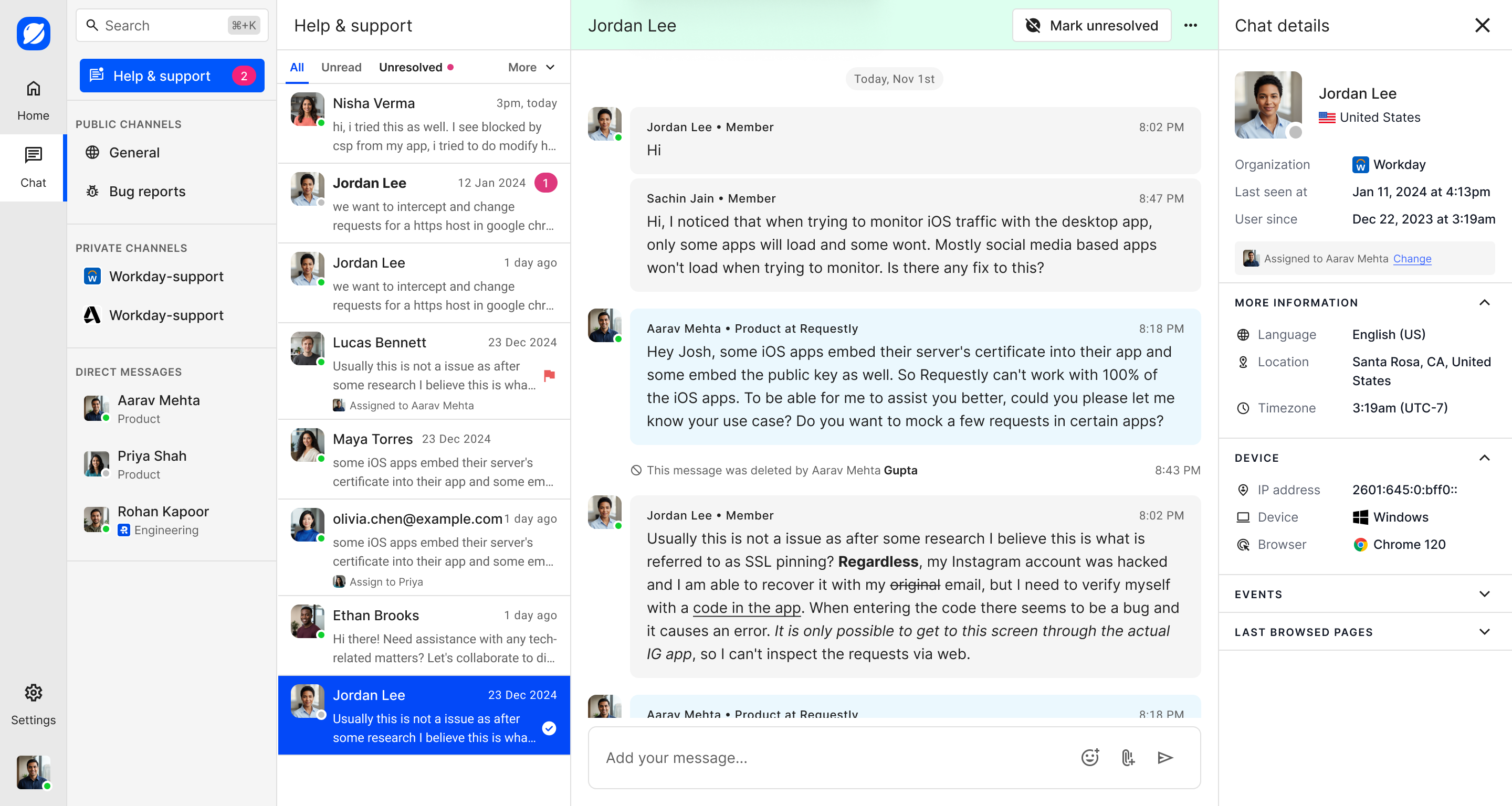
The support inbox gives the team practical controls without turning the product into a traditional ticket table. Conversations can be filtered, assigned to a teammate, flagged for attention, marked as resolved, or reopened. Clear menus, badges, and confirmation messages show what changed.
Channels inside the customer widget
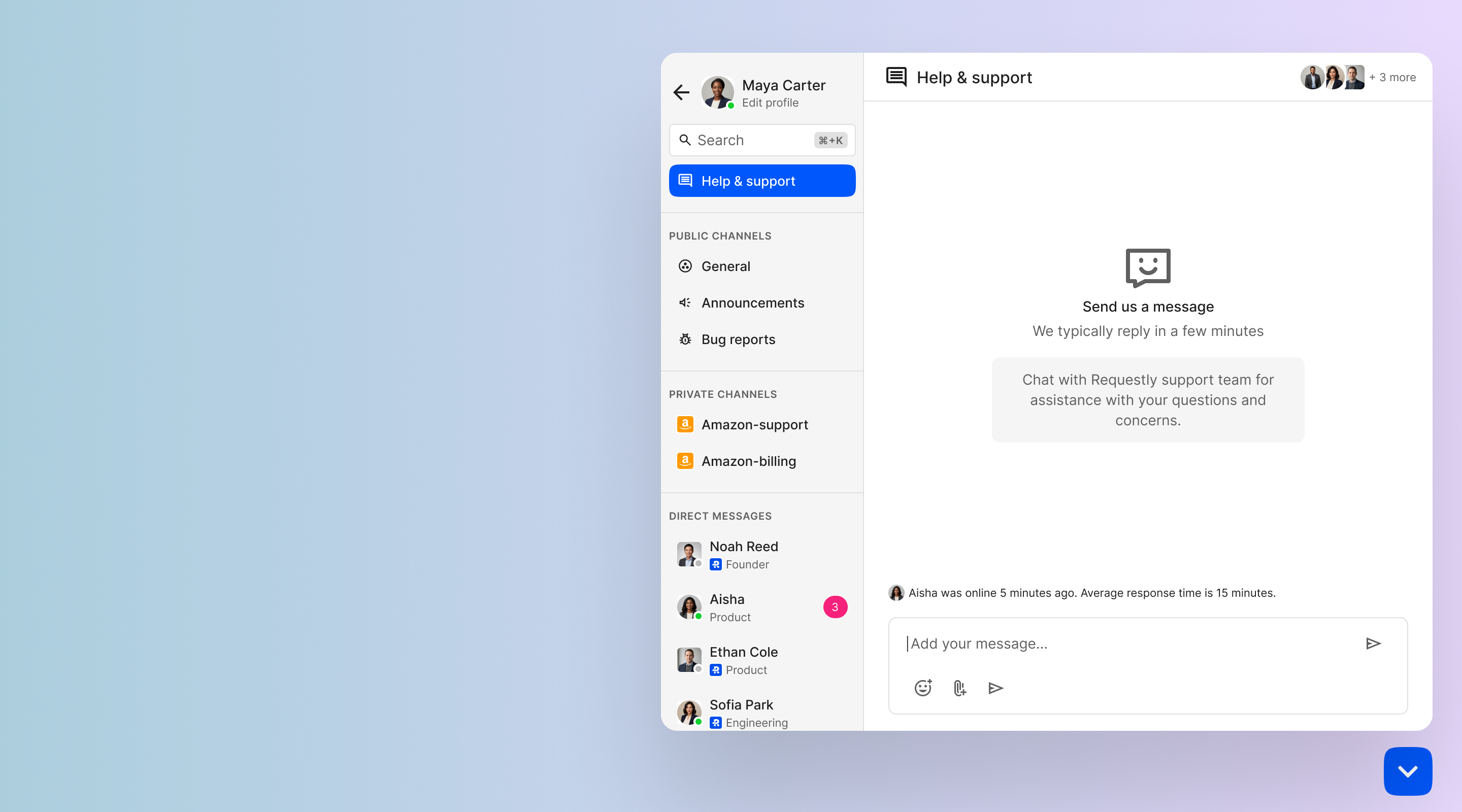
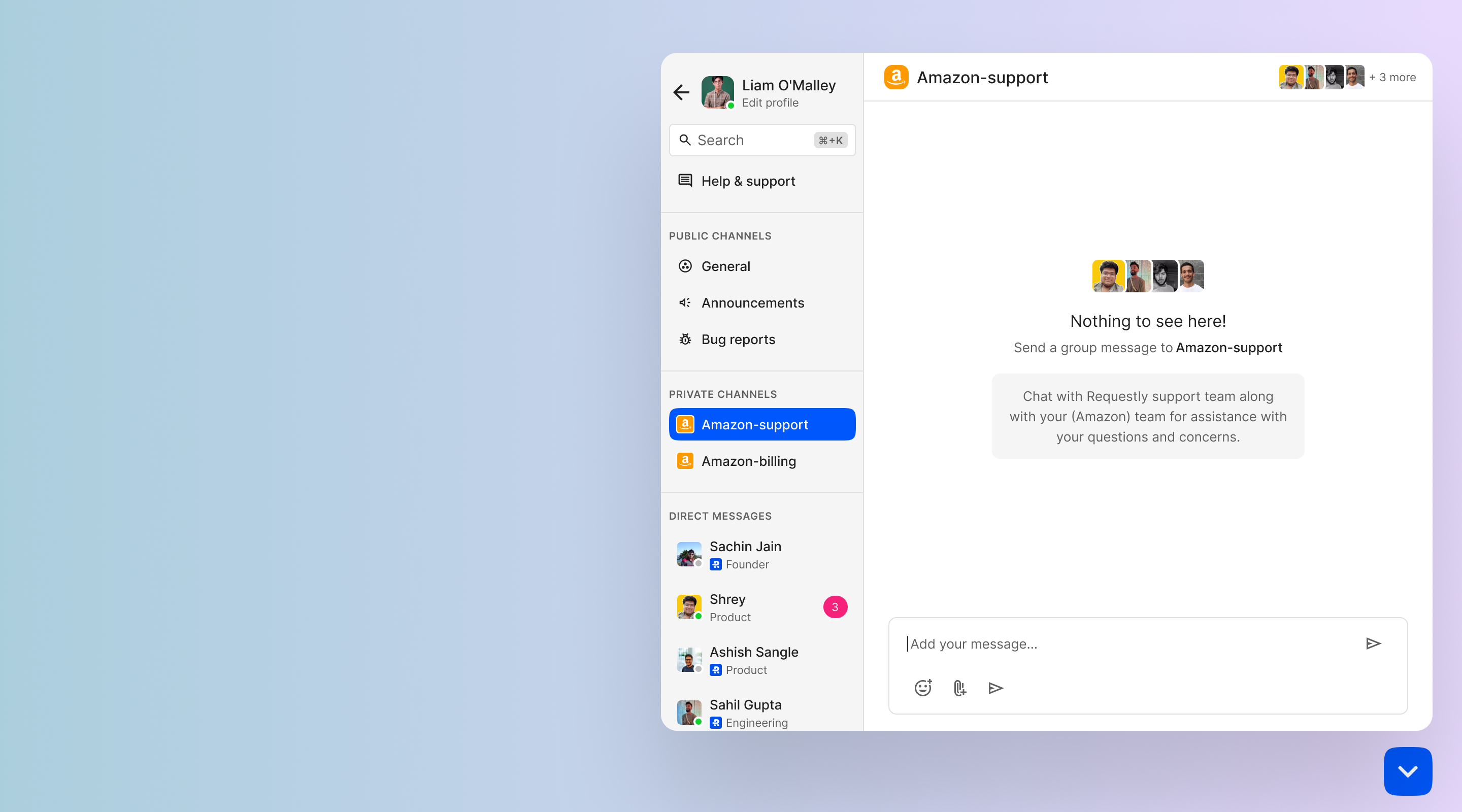
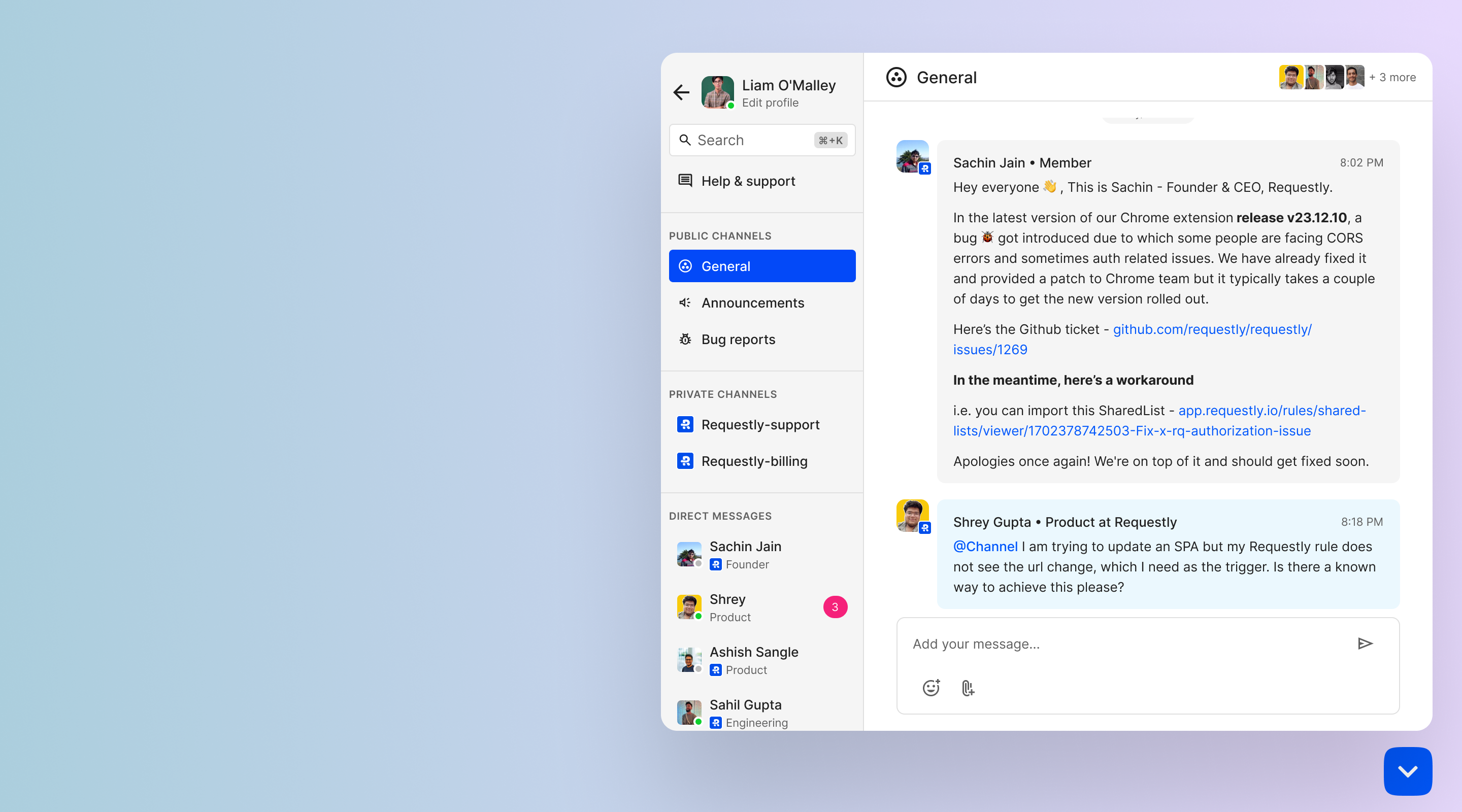
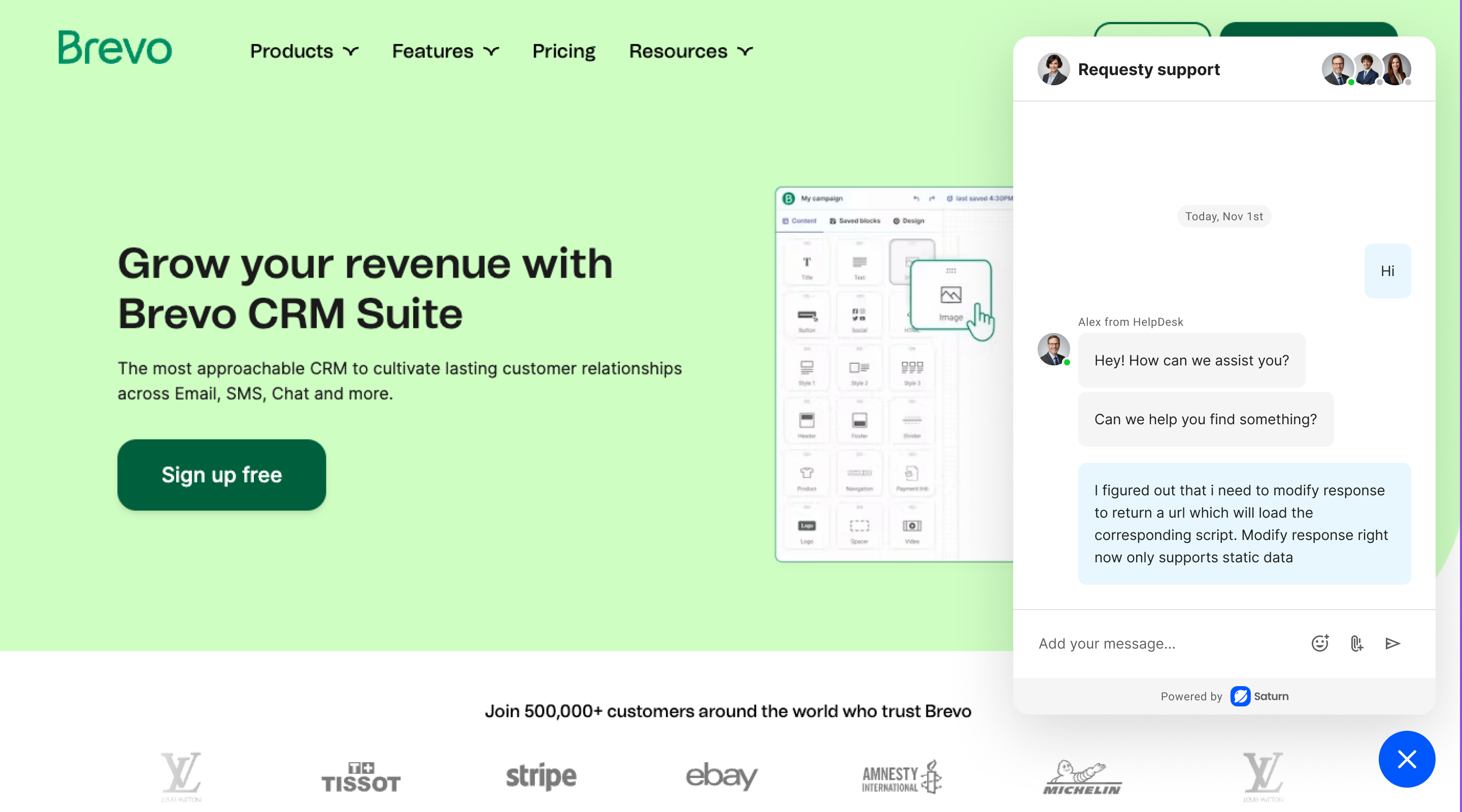
The embedded widget gives customers one place to contact support and join other conversations. Its home screen connects help and support, private company channels, and public community channels. Each space uses the same familiar message composer and channel structure.

Support for public website visitors
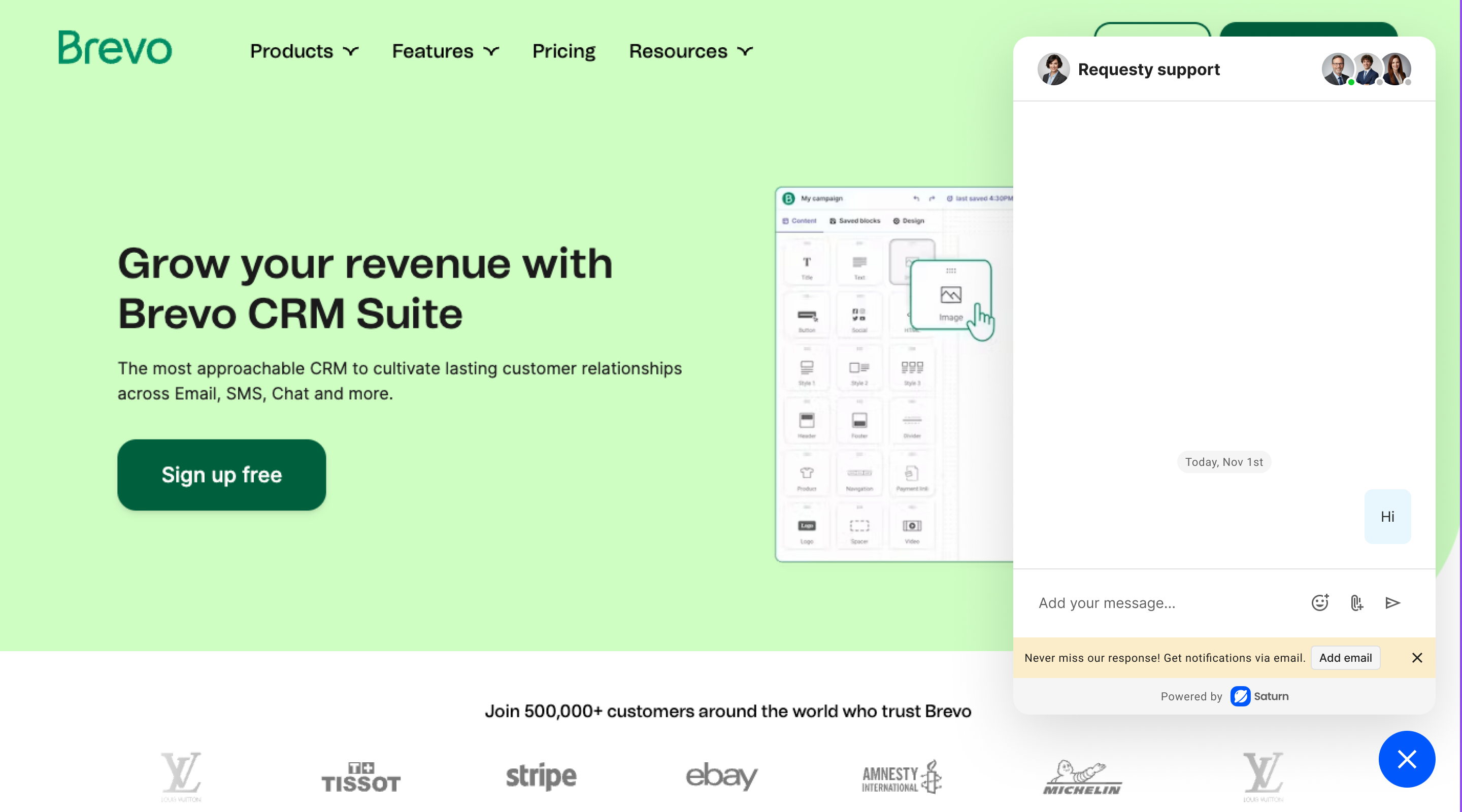
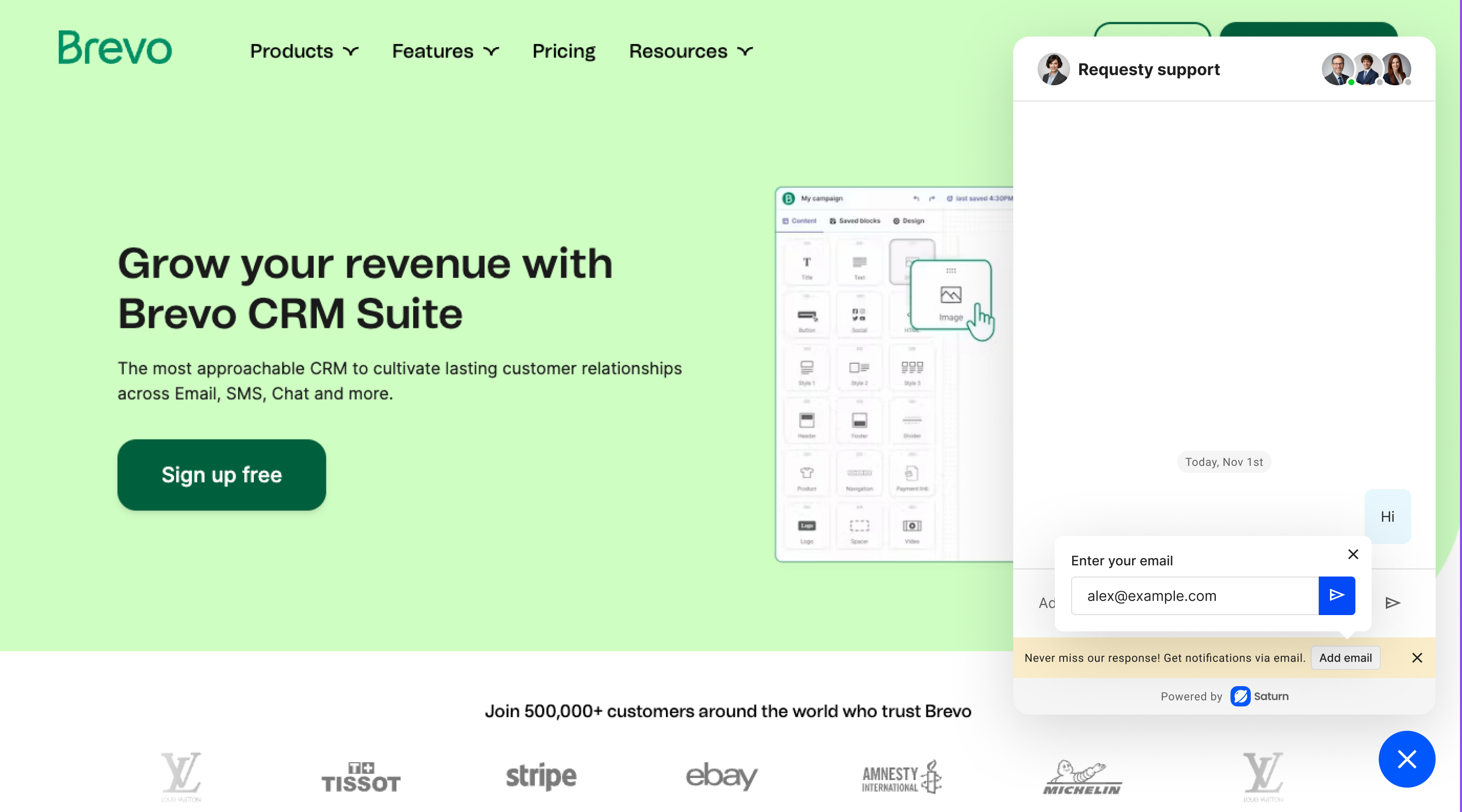
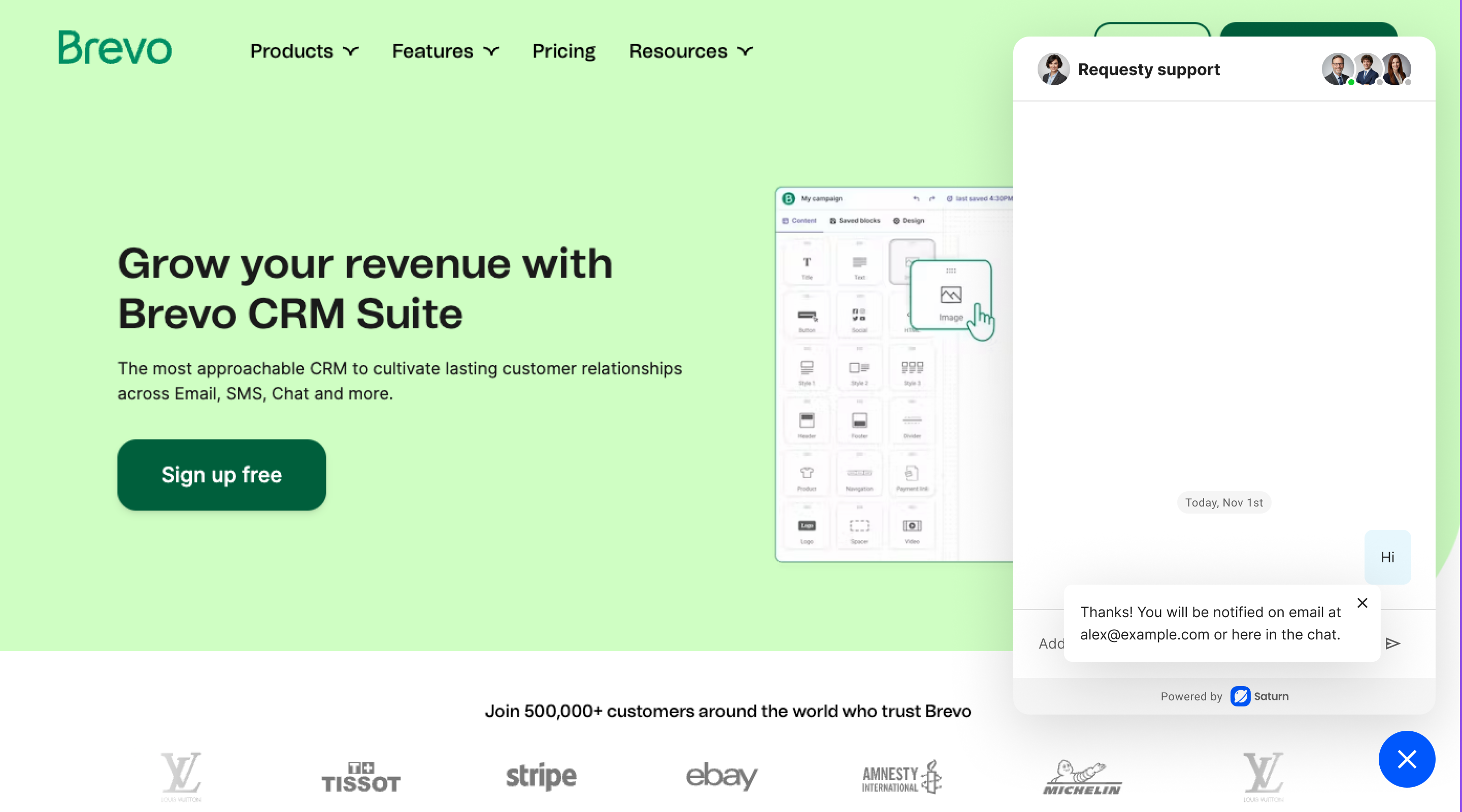
Public visitors can start a support conversation from the website widget. The flow can ask for an email address, confirm that updates will be sent there, and continue the discussion when a support person replies.
Outbound messages without opening the widget
Businesses can also start a conversation from the collapsed widget. A short outbound message can include quick replies or a direct option to respond, so the customer can act without first navigating through the full widget.


MVP outcome
A complete working concept
We moved beyond static designs and built an MVP covering setup, the admin workspace, support operations, channels, and the customer-facing widget.
Positive internal feedback
A few internal users tried the MVP and liked the direction. Their reviews and comments helped us validate the basic concept.
A clearer view of the investment
Building the MVP also showed that taking Saturn further would need significant product, engineering, and operational effort.
Why we shelved Saturn
The MVP was successful as an experiment, but Saturn was outside our existing product line. Evolving it into a full product would require substantial time, effort, and cost. At the same time, our running products needed more focus. We decided to shelve Saturn after the MVP and continue investing in the products already in the market.